
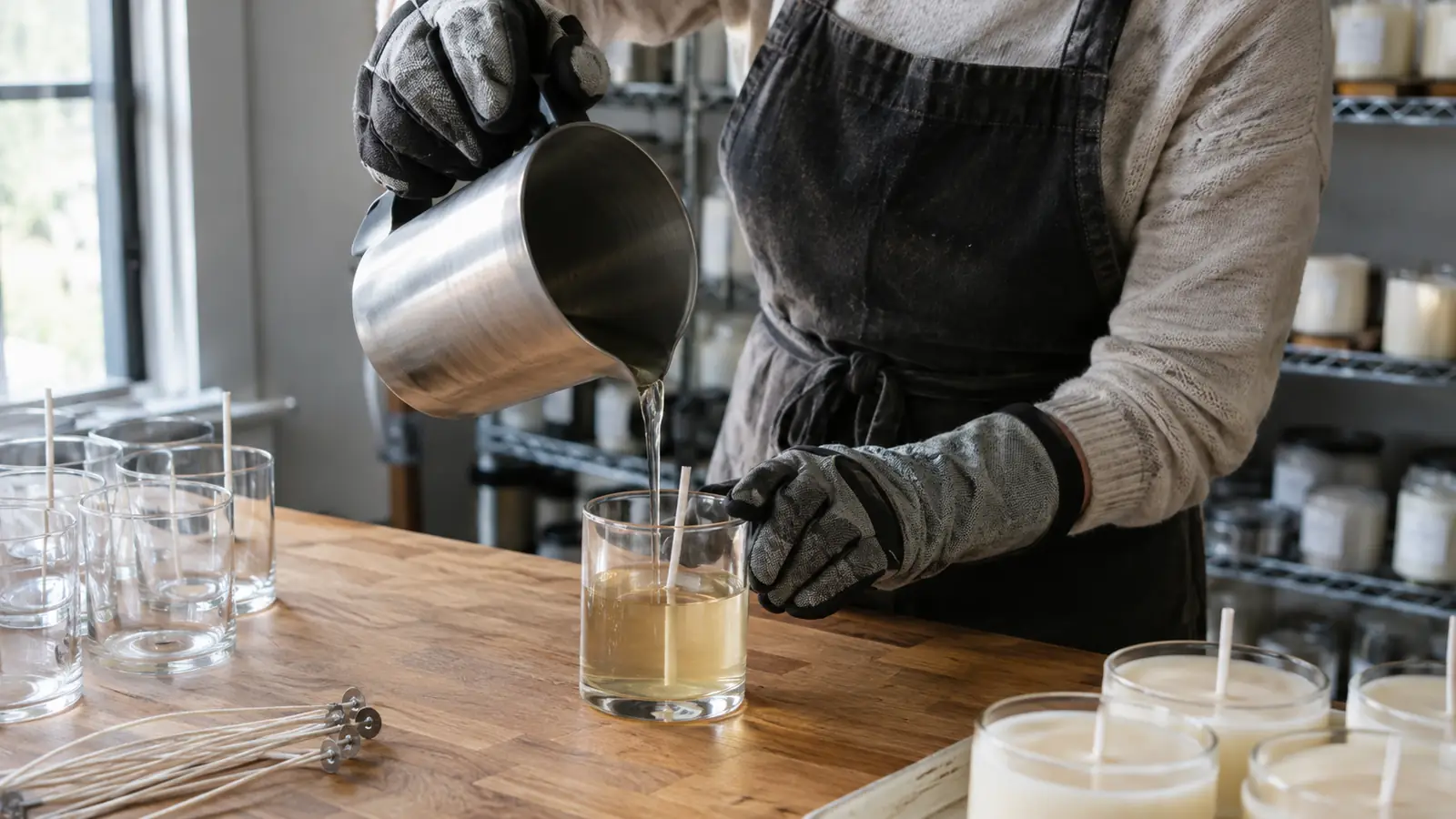
I have a confession to make. For my first two years of making candles, I melted wax in a battered kitchen saucepan and poured it through a glass measuring cup with a spout that dripped down the side every single time. I told myself it was fine. Then I spent one whole Saturday afternoon cleaning hardened wax off my butcher-block table, my stove burner, and the handle of a pan that had gotten too hot to hold, and I finally admitted it was not fine. I had 12 containers ready to pour that afternoon, and I burned my wrist on the saucepan handle before I got the first one filled. The next morning I ordered the EricX Light Pouring Pot, and it has been the pot I reach for at every single pour since.
This is not a first-impression review. I have used this pouring pot for months of weekly pours in the converted corner of my garage where I make soy and coconut-soy container candles for my Saturday farmers market booth. I have poured hundreds of candles with it, at temperatures from 120 to 185 degrees, and I have a pretty good idea of what it does well and where it gets on my nerves.
The Quick Verdict
The EricX Light Pouring Pot is the rare tool that fixes the messiest part of candle making without costing a fortune. It pours clean, holds heat well, and has survived months of weekly use in my garage. It is not perfect, and I will tell you exactly where it falls short.
Amazon Check Today's Price →Stop Pouring Wax From a Kitchen Pitcher
If you are still melting wax in a saucepan and pouring through a measuring cup, you already know the mess I lived with for two years. The EricX Light Pouring Pot is the upgrade that makes every batch cleaner and faster.
Amazon Check Today's Price on Amazon →How I've Used It
My setup is simple. I pour in a corner of my garage on a long butcher-block folding table, with a two-burner electric hot plate and a metal utility shelf where my candles cure. I make mostly soy and coconut-soy container candles, and in the winter I add a few beeswax pillars. That means this pot has seen a lot of different waxes, and it has handled all of them.
My typical pour day starts with me weighing out wax flakes into the pot, then setting it on the hot plate at medium heat. I stir occasionally with a wooden spoon, and I use a thermometer to watch the temperature. For soy, I usually pour around 135 degrees. For coconut-soy blends, I pour a little cooler. The pot holds 4 pounds of wax, which is exactly the size of my standard batch, so I can melt the whole thing at once and pour all my containers in one session.
The first batch I made with this pot was a coconut-soy blend for the market booth. I weighed out a full 4 pounds of flakes, set the pot on medium heat, and it went from solid to fully melted in about 25 minutes. My old saucepan took closer to 40 minutes because the bottom would get hot while the top stayed lumpy, and I would have to stir constantly to keep it from scorching. With the EricX Light pot, the melting was even enough that I could walk away to set up my containers and come back to a smooth, ready batch.
Before I ordered this pot, I tried two other things. First I bought a stainless steel measuring cup with a pour spout at a kitchen supply store, thinking it would fix the drip problem. It dripped worse than the glass one, and the handle conducted heat so well that I burned my thumb on the second pour. Then I tried a cheap aluminum pitcher from a craft store. The spout was too wide, the wax came out in a thick, uneven flow, and it left a crust on the lip that got into my containers. The EricX Light pot was the third try, and it is the one that stuck.
The handle is the first thing I noticed. It stays cool enough to hold comfortably even when the wax inside is at 180 degrees, which is more than I can say for the saucepan handle that burned me twice. The spout is the second thing. It is designed to drip less than a standard kitchen pitcher, and in my experience it really does. I still get a drop or two on the side of the pot when I pour too fast, but nothing like the steady stream I used to get from my glass measuring cup.
What Makes the EricX Light Pouring Pot Different
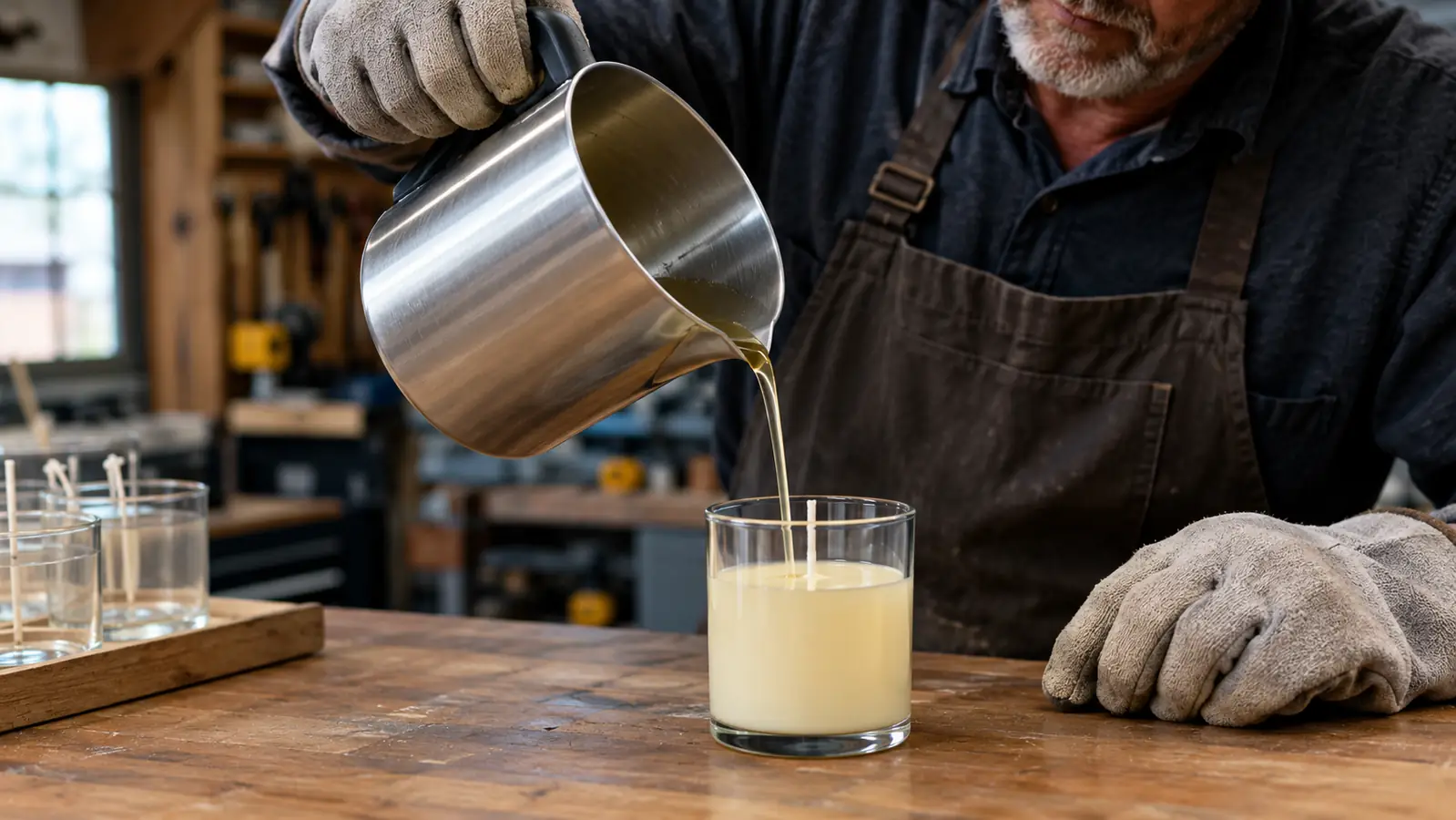
The EricX Light Pouring Pot is made of aluminum, which matters more than you might think. Aluminum heats up quickly and evenly, so I do not get hot spots that scorch the wax at the bottom of the pot. It also cools down faster than a heavier stainless steel pot, which is useful when I need to bring a batch down to pouring temperature without waiting forever.
The 4-pound capacity is the sweet spot for a home candle maker. It is big enough to melt a full batch of wax for a market day, but not so big that it is awkward to lift and pour one-handed. I have used bigger pots at a friend's studio, and I always end up wishing I had my EricX Light pot back.
The dripless spout is the feature that sold me. It is shaped so the wax flows in a thin, controlled stream instead of glugging out in a thick blob. That means fewer spills, less wax wasted, and a much easier time filling containers to the same level every time. When you are making 20 or 30 candles in one session, that consistency is worth a lot.
I measured the difference once because I was curious. With my old glass measuring cup, I would lose maybe a quarter of an ounce of wax per pour to drips down the side and the occasional glug that went wide of the container. Over a 24-container batch, that added up to several ounces of wax wasted, plus the cleanup. With the EricX Light pot, I pour a full batch and the paper towel I wipe the spout with stays almost clean. The stream is steady enough that I can fill each container to the same line without stopping to check.
The handle also gives me more control than I expected. It is long enough that I can grip it near the end and keep my hand well away from the heat, and the angle lets me tip the pot slowly instead of all at once. That matters when you are pouring 135-degree soy wax into a glass container and you do not want to slosh it over the rim. I have filled hundreds of jars with this pot and I can count on one hand the times I have spilled.
How It Holds Up Over Months of Use
I have had my EricX Light Pouring Pot for about eight months now, and I use it at least once a week. It has been heated and cooled hundreds of times, scraped with a wooden spoon, and wiped down with paper towels after every pour. The aluminum has developed a few light scuffs on the outside, but there are no dents, no warping, and no signs that the handle is loosening.
The one thing I have to be careful about is not leaving wax in the pot to cool completely. When soy wax hardens in the pot, it can be a pain to clean out. I have learned to pour while the wax is still liquid, then wipe the pot out with a paper towel while it is still warm. That takes me about 30 seconds and keeps the pot ready for the next batch.
I have also dropped this pot once. It hit the concrete floor of my garage with a loud clang, and I was sure I had ruined it. I picked it up, checked the spout for dents, and it was fine. I would not want to make a habit of dropping it, but it is clearly built to take some abuse.
The hardest test came in December, when I switched to beeswax pillars for the holidays. Beeswax melts at a higher temperature than soy, around 145 to 150 degrees, and it is stickier and harder to clean off anything it touches. I used the EricX Light pot for three straight weekends of pillar pours, and the only issue I ran into was my own impatience. I let a batch cool in the pot overnight once, and I spent a solid 20 minutes the next morning chipping out the hardened wax. That was my mistake, not the pot's. Once I warmed it back up on the hot plate, the wax softened and came out easily.
After eight months, the outside has a few scuff marks and a light patina from being heated and cooled so many times. The inside is smooth, with no pitting or rough spots where wax could stick. A few weeks ago I thought I felt a little play in the handle. It turned out to be a thin film of hardened wax near the base, not a loose joint. I wiped it clean with a warm paper towel, and the handle felt as solid as the day I unpacked it.
The dripless spout is the feature that sold me. It flows in a thin, controlled stream instead of glugging out in a thick blob, and that consistency is worth a lot when you are filling 20 containers in one session.
Where It Falls Short
No review is honest without the cons, so here are mine. First, the pot has no measurement markings on the inside. I weigh my wax on a scale anyway, so this does not bother me, but if you like to measure by volume, you will need to keep a separate measuring cup around.
Second, the handle is comfortable, but it is not insulated all the way up. If I grip it too close to the pot, I can feel the heat. I have learned to grab it near the end, and I always use a heat-resistant glove when the wax is above 160 degrees. That is just common sense with any pouring pot.
Third, the pot is not dishwasher safe. I would not put any of my candle equipment in the dishwasher anyway, because wax and food should not mix, but it is worth knowing that you will be hand-washing this pot after every use.
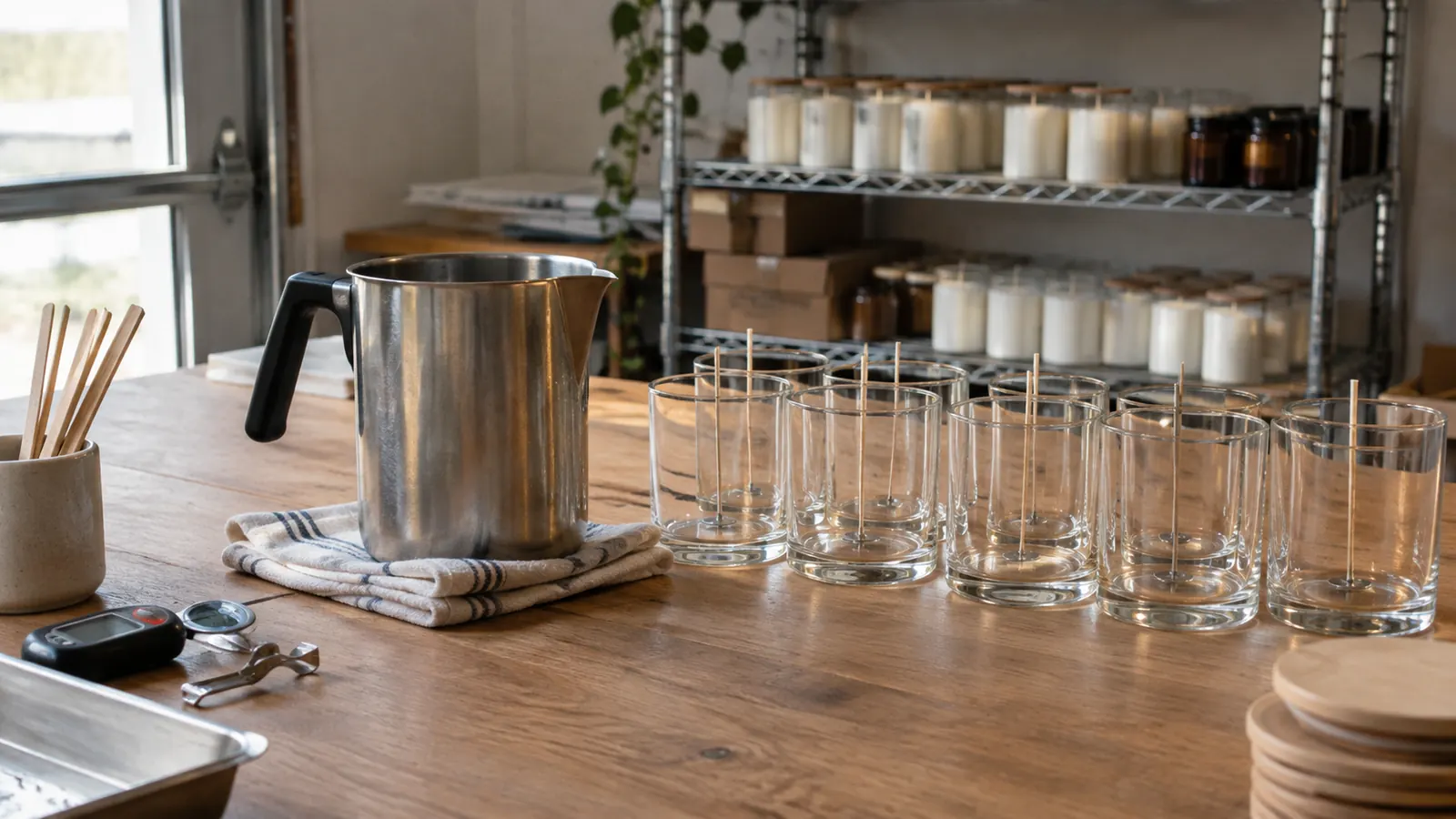
Fourth, the outside of the pot gets hot all the way up, not just the bottom. That is normal for an aluminum pot, but it means I have to be careful where I set it down. I keep a folded kitchen towel on my work table as a dedicated resting spot. The one time I set it directly on the butcher block, it left a faint ring that I had to sand out.
The cleaning routine is the part that took me the longest to get right. For the first month, I tried washing the pot with soap and hot water right after pouring, the way I would wash a normal pan. That was a mistake. The soap left a film that took two batches to burn off, and I could smell it when the candles were burning. Now I wipe the pot out while it is still warm, and I only use soap if I have poured a batch with a strong fragrance oil. Even then, I rinse it thoroughly with hot water and dry it completely before the next use.
What I Liked
- Dripless spout pours a thin, controlled stream with almost no mess
- Aluminum heats evenly and cools quickly, so no scorched wax
- 4-pound capacity is perfect for a home candle maker's standard batch
- Handle stays cool enough to hold comfortably during a pour
- Built tough enough to survive a drop onto a concrete garage floor
Where It Falls Short
- No measurement markings inside the pot
- Handle gets warm near the base, so you need a glove for very hot wax
- Outside of the pot gets hot all the way up, so you need a safe place to set it down
- Not dishwasher safe, and cleaning requires a quick wipe while warm
Who This Is For
The EricX Light Pouring Pot is for the home candle maker who is tired of pouring wax from kitchen equipment. If you are making candles as a hobby, or if you are like me and selling at a small weekend market, this pot is the right size and the right price. It is also a great choice if you are just starting out and want to avoid the mess that made me wait two years to upgrade.
I have a friend who makes candles in her kitchen with her kids, and she borrowed my pot for an afternoon to pour a batch of melt-and-pour soap. She ordered her own the same week. The learning curve is basically zero: you weigh your wax, melt it, pour it, wipe it out. If you can use a saucepan, you can use this pot.
Who Should Skip It
If you are running a commercial candle business and melting 10 or 20 pounds of wax at a time, this pot is too small for you. You will want a larger melting pitcher or a dedicated wax melter. And if you prefer to measure wax by volume instead of weight, the lack of measurement markings will probably annoy you enough to look elsewhere.
I would also say this pot is not the right choice if you only make candles a few times a year. A good pouring pot is worth having, but if your hobby is once a season, you can get by with what you have and put the money toward wax and wicks instead.
The Pot I Reach for Every Pour Day
After months of weekly use, the EricX Light Pouring Pot is the tool I trust for every batch. If you are ready to stop cleaning wax off your table, this is the upgrade that makes it happen.
Amazon Check Today's Price on Amazon →