
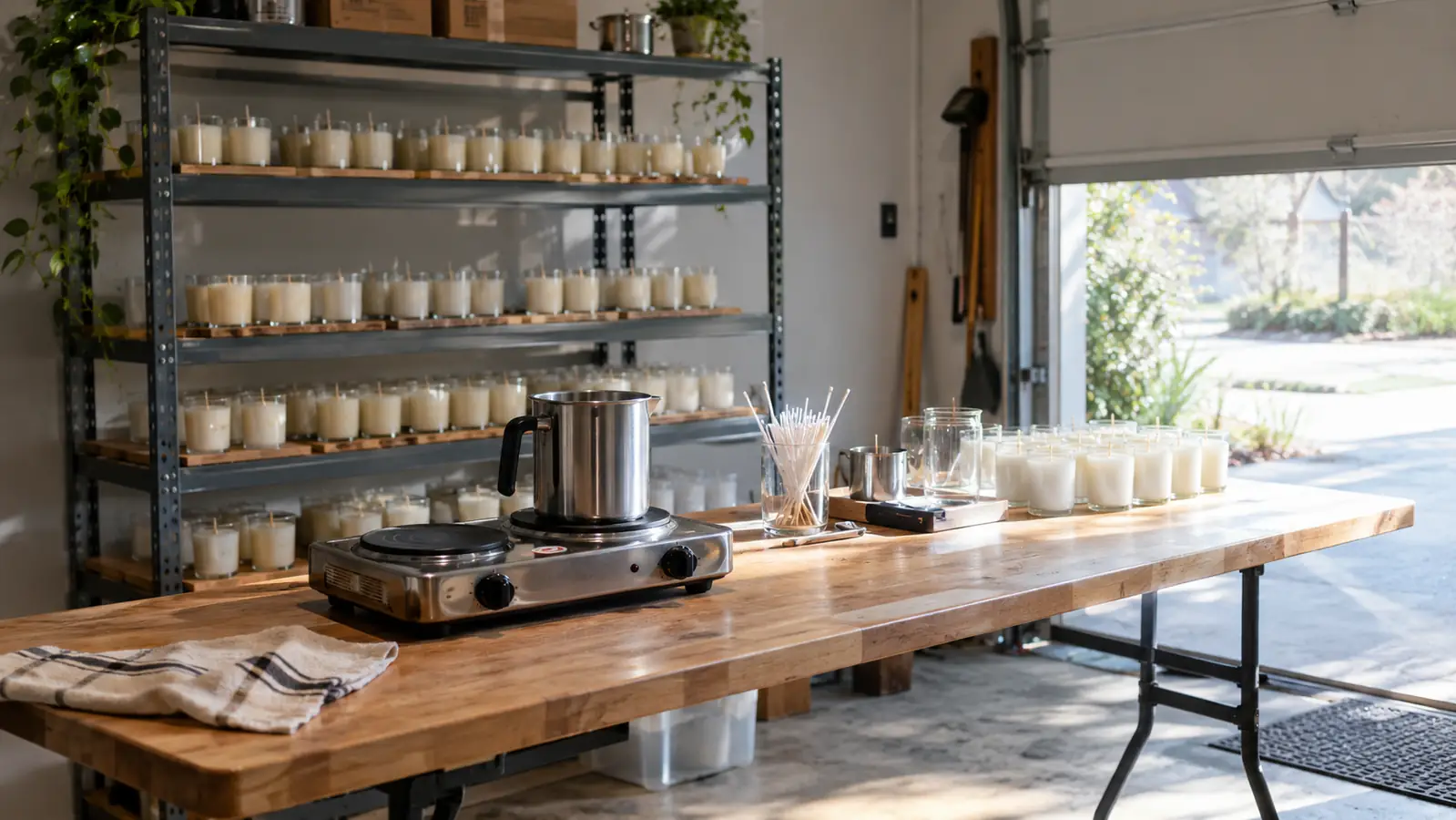
Every Saturday, somebody stops at my booth, picks up a candle, and asks the same question: "what kind of wax is this?" I've been giving the same answer for about four years now, since I moved my melting pot out of the kitchen and into a converted corner of the garage. Soy, I tell them. Then comes the follow-up, usually from someone who tried soy once and got a candle that didn't burn right: "why soy?" That answer takes a little longer, and it's the reason I spent months testing the Freedom Soy Wax from American Soy Organics before I let it anywhere near my market stock.
This review covers what the product listing won't tell you. I poured my first batch with this wax back in July and kept pouring through the fall and into January, which added up to more than a dozen market weeks' worth of candles plus all the wick tests in between. I used it on a two-burner electric hot plate, poured into plain glass jars, and cured everything on a metal utility shelf in a garage that's unheated most of the winter. I tested it the way my customers will use it, not the way a lab would, because that felt like the honest way to judge it.
The Quick Verdict
A dependable, forgiving container wax that turns into clean-burning candles on basic equipment. It won't give you the loudest scent throw in the booth, but it will give you a consistent one, week after week.
Amazon Check Today's Price →The wax I kept reaching for all season
After five months of weekly pours, this is the bag I reach for first on pour day. If you're planning a pour on a hot plate and a folding table, it's worth a look before you buy anything else.
Amazon Check Today's Price on Amazon →How I've Used It
My setup isn't fancy. A converted corner of the garage, one long butcher-block folding table, a two-burner electric hot plate, and a metal utility shelf where candles cure for a week before they're ready to burn. I pour most Saturdays, and in the weeks before the fall market I pour twice to keep the booth stocked. The Freedom Soy Wax has been my main container wax for about five months now, which in my book counts as a proper long-term test. I've been making candles for four years, so I have plenty of other waxes to compare it against.
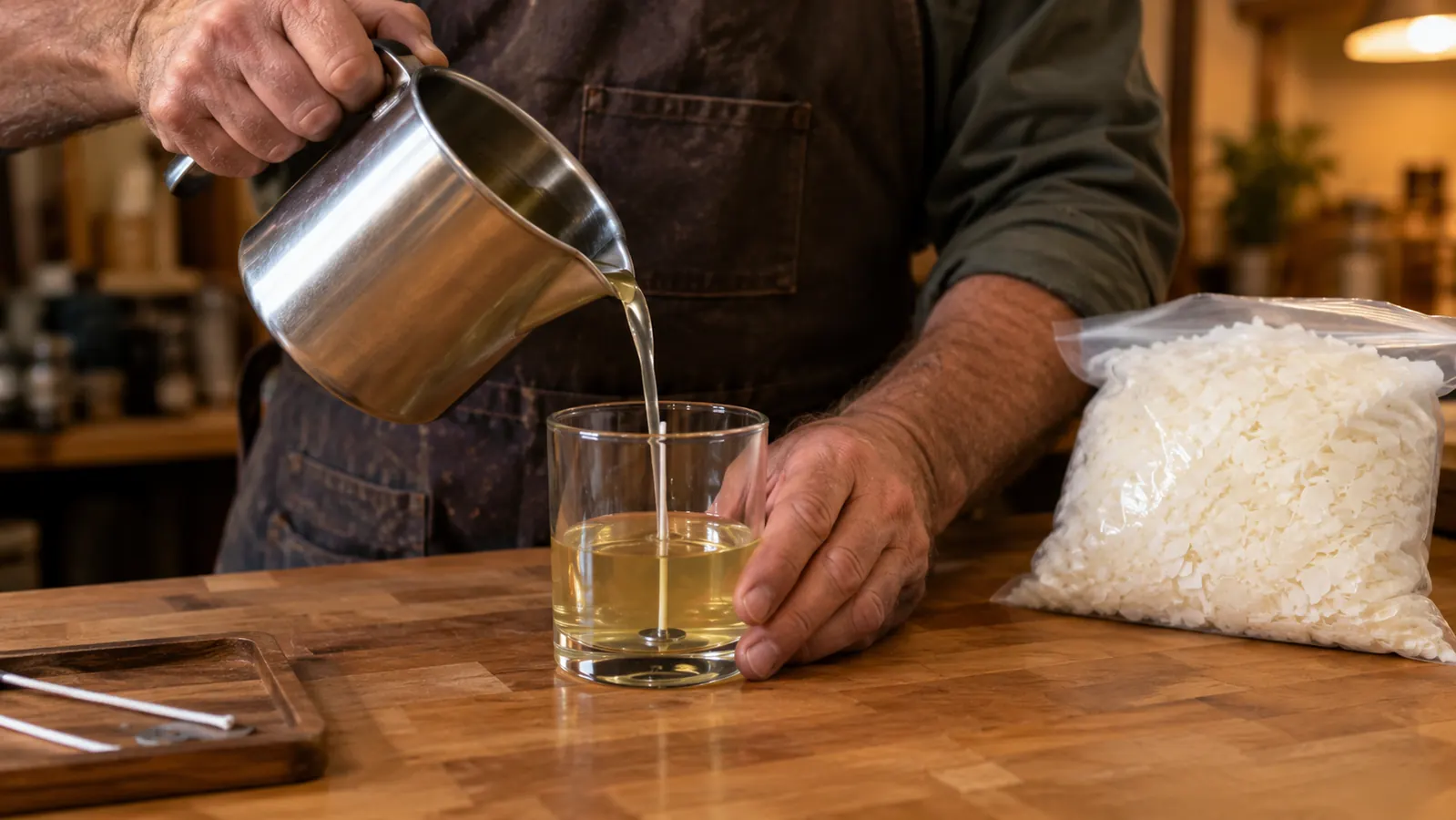
A five-pound bag of beads gives me roughly a dozen eight-ounce candles, which is just about the right size for a weekend of pouring. I melt a pound at a time, heat it to the range that works with this particular wax, add fragrance oil at the temperature the oil likes, and pour. Nothing about the process is exotic, and that's the point. I need a wax that behaves on a hot plate, not a machine that needs its own room and a ventilation system.
I've run it through the conditions my garage throws at it: humid summer evenings, a cold snap in November when the hot plate had to work twice as hard, a pour day where I forgot to warm the jars and paid for it with extra repours. The wax handled all of it, and my mistakes were the only variable that changed. That consistency is the reason I moved on from the wax I used before this one, and it's the reason I've already ordered my next bag of the same.
How the Wax Behaves on the Hot Plate
The first thing I noticed was how clean it melts. Some waxes I've tested leave a greasy film on the melting pot or put out a whiff of something waxy while they heat. The Freedom Soy Wax from American Soy Organics melts clear and quiet. I don't smell anything until I add the fragrance, which is exactly what I want when I'm pouring in a space that also holds Dale's toolbox and a lawn mower.
It also pours level. In the first month I had maybe two candles that needed a touch-up pour, and both were my own fault: I poured too cold and the surface set with a dip around the wick. When I hit the right pour temperature, the tops set smooth and even on their own. For a small-batch maker, that's the difference between a relaxing pour day and one where you're chasing sinkholes all afternoon with a heat gun.
The one thing I had to learn was patience with the wick. Soy wax is softer than the paraffin blends I tried years ago, and the wick needs to be sized up a little to reach a full melt pool. I tested three wick sizes before I found the one that works in my eight-ounce jars. That's normal for soy, and the listing won't tell you about it, so plan for it on your first batch.
Cure Time and Scent Throw, the Part That Actually Matters
Here's the tradeoff nobody puts on the product page: soy wax needs to cure. A candle poured on Saturday will smell faint in the jar on Sunday. Give it a week on the shelf and the scent opens up. I tested this wax at three days, seven days, and fourteen days, and the difference between day three and day seven is dramatic. Seven days is my minimum now. Fourteen is better if I have the shelf space, which I usually don't in market season.
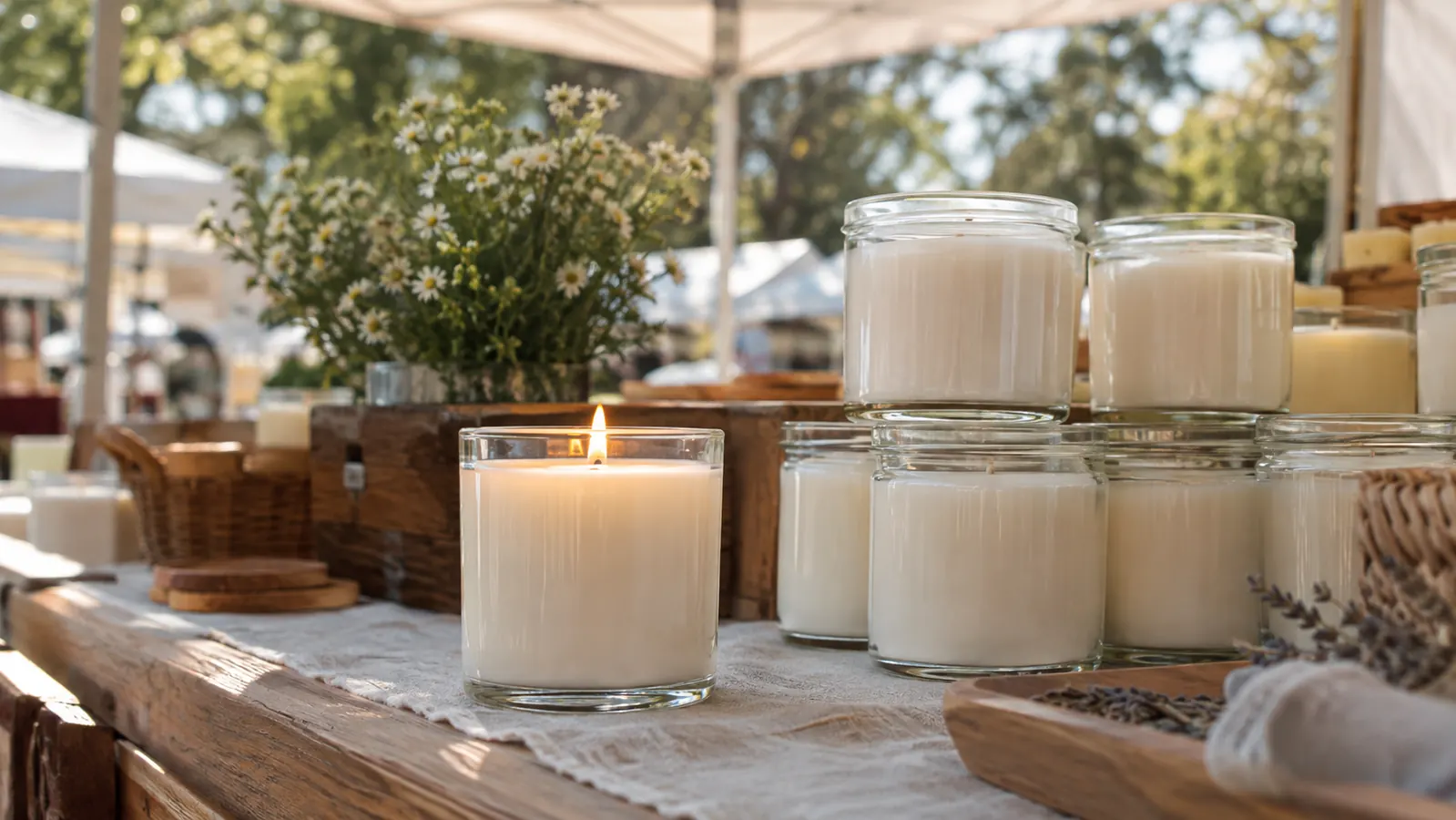
At the booth, customers notice the scent before they notice the label. The cold throw from a properly cured candle fills the space around my table, and the hot throw carries when someone lights the tester I keep burning on the corner of the table. It's good. It's not the loudest candle on the market, and I won't pretend it is. A paraffin blend will shout across the aisle. This wax speaks at a normal volume, and plenty of my customers tell me they prefer it that way.
Burn quality has been steady all season. Full melt pool within about thirty minutes, no tunneling, no soot on the jar rims. I burned testers from the same batch at week one, week three, and week six, and the burn was the same every time. That's the kind of boring, dependable behavior I need when I'm packing a dozen candles into a crate on Friday night for Saturday's market.
The Downsides Nobody Mentions in the Listing
Let's be honest about the things that annoyed me. Frosting, for one. Soy wax naturally develops a white, lacy pattern on the surface, especially when it cools in a cold garage. It doesn't hurt the candle at all, but it shows in a clear jar, and a few of my early frosty batches looked like they'd been sitting in a damp basement. Warming the jars before pouring helped a lot. It didn't eliminate frosting entirely, and I've learned to accept it as part of the soy look.
The finished candle is soft, too. A candle that rides in a warm car on the way to market can pick up a dent from a finger or a box edge. I learned to pack cured candles so they don't touch each other, and I don't unload the booth until the tent is up and the table is steady. These are small things, but they're real things, and knowing them ahead of time would have saved me a few ugly candles early on.
And the sinkholes. Soy wax shrinks as it cools, and sometimes the wax around the wick pulls down into a little crater. I repoured maybe one candle in ten, which is fine at my volume. If you're pouring hundreds of candles a week, that repour rate will cost you real time. This is a small-batch wax, and it knows it. Plan your schedule around a touch-up pour and you'll be fine.
How It Compares to the Coconut-Soy Blend I Also Pour
I keep two waxes on my shelf. The Freedom Soy Wax is my standard for the weekly market line, and a coconut-soy blend is what I reach for when I make the few premium candles I sell in the fall. Comparing the two is useful because they fill different jobs, and I've had enough months with both to know which one does what. This is the part of the review I wish someone had spelled out for me when I was picking my first wax.
The coconut blend throws scent a little louder and cures with a smoother, creamier surface. It's also fussier about pour temperature, and it costs more per candle, which matters when you're pricing for a market crowd. The Freedom Soy Wax from American Soy Organics is easier to work with, sets up more predictably, and gives me a perfectly good candle for everyday buyers. Most of my customers can't tell the two apart in a burn test. The ones who can are the ones who buy the premium line.
If I had to pick one wax and one wax only, it would be the Freedom Soy. Not because it wins any single category by a mile, but because it's the most dependable at everything. When your pour day is Saturday and your market day is the Saturday after, dependable is the whole job.
Storage and Shelf Life, the Boring Stuff That Matters
I store the open bag in a plastic bin with a lid, tucked under the utility shelf, and I've had zero problems with it. The beads don't clump, don't pick up garage smells, and pour the same from the first batch to the last. I can't say that about a wax I used a couple of years ago, which soaked up moisture over a humid summer and popped and hissed in the melting pot like it was angry at me.
Shelf life matters when you buy five pounds at a time. I've been working through the same bag for months, and the last pour came out identical to the first, same melt, same pour, same cure. That's the detail that convinced me to keep buying this wax: you can trust it to sit on a shelf between market seasons and still behave when you fire up the hot plate again in the fall.
What I Liked
- Melts clean and pours level on a basic two-burner hot plate
- Forgiving of a busy schedule and a cold garage
- Consistent from one bag to the next, batch after batch
- Full melt pool and no soot once the wick is sized right
- Natural soy base that cures into a smooth, even top
Where It Falls Short
- Frosts in cooler weather, especially in clear glass
- Soft surface marks easily if candles are handled warm
- Needs a full week of cure time before the scent opens up
- Sinkholes around the wick on maybe one in ten pours
- Scent throw is good, not loud
I poured my first batch in July and my most recent in January. Same melt pool, same burn time, same quiet scent throw. That's what I mean by dependable.
Who This Is For
If you're a small-batch maker pouring on a hot plate in a corner of your house or garage, the American Soy Organics Freedom Soy Wax is worth your time. It forgives a pour temperature that's a few degrees off, it doesn't demand expensive equipment, and it cures into a candle you're proud to put on a booth table. It's also a good first soy wax if you're moving away from paraffin and want a gentle transition.
The learning curve is short. Size the wick up, warm your jars, and let the candles cure for a full week. That's the whole list. By your third batch you'll have the routine down, and the routine is exactly what this wax rewards. If you're the kind of maker who likes a material that gets out of the way and lets you work, you'll get along with it fine.
Who Should Skip It
If you make pillars or tarts, this isn't the wax for you. It's formulated for containers, and it doesn't hold a pillar shape worth a darn. I keep a separate beeswax for the winter pillars I make, and I'd never pour a tart from a container wax. The listing is clear about this, but it's worth repeating because people do try.
If your whole selling point is maximum scent throw, a pure soy wax will leave you frustrated. Paraffin and paraffin-blend waxes carry fragrance louder and cheaper. And if you need a candle ready to sell the same day you pour it, soy's cure time will fight you the whole way. This wax rewards patience, and it's honest about that. The candles are good. They just need their week before they're ready to meet a customer.
A workhorse wax for a one-person pour day
Five months in, this is the bag I keep coming back to, and I've already ordered my next one. If it suits your setup, it might do the same for yours.
Amazon Check Today's Price on Amazon →