
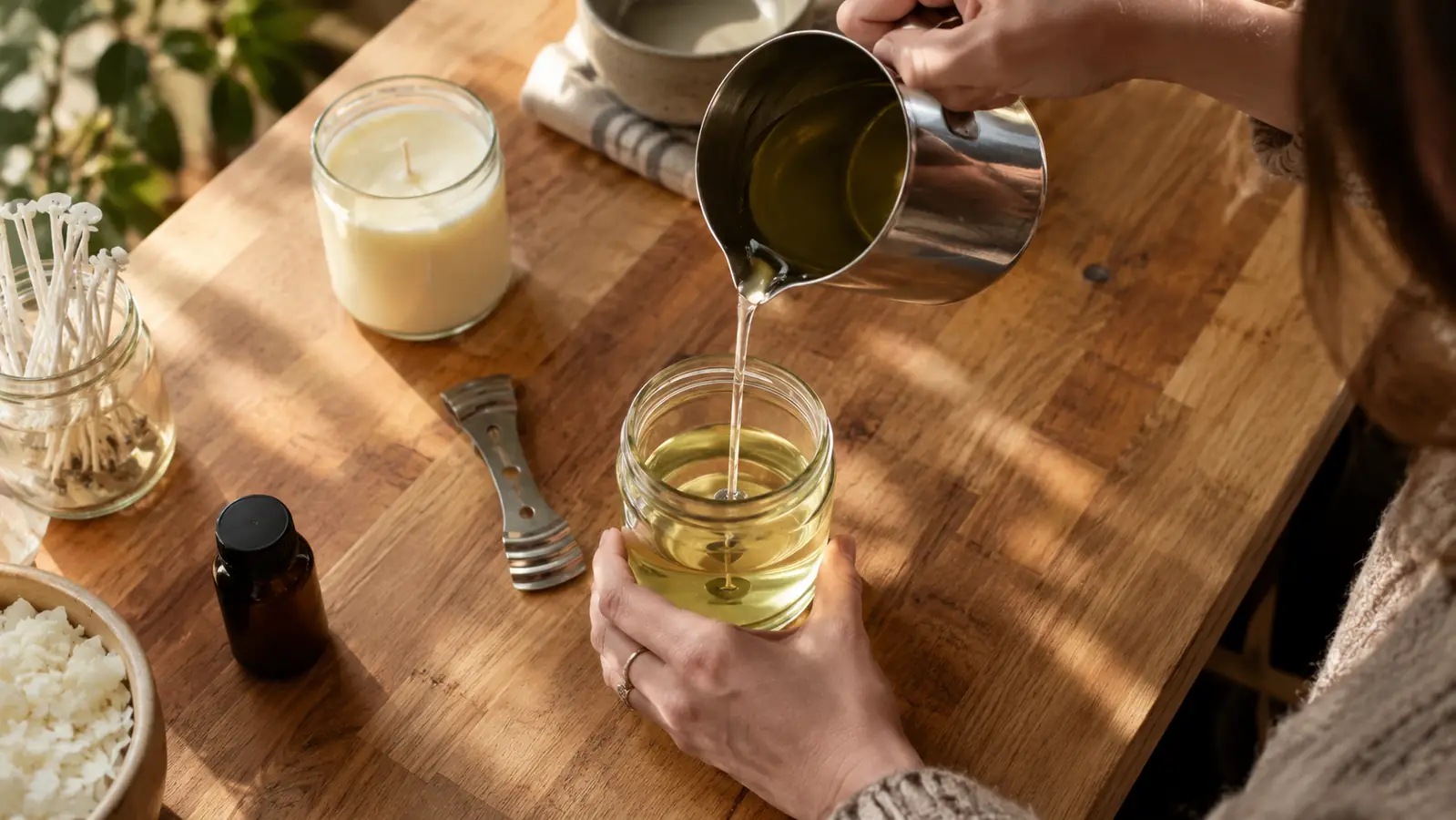
If you pour candles at home, you have probably stood in front of a shelf of empty containers and asked yourself the same question I did: should I buy SHOWIN Candle Jars or a stack of candle tins? I make soy and coconut-soy container candles in a converted corner of my garage, and I have sold at the same Saturday farmers market booth for about four years. I have poured the same wax into both containers, tested the same wicks in both, and watched how each one behaves on a market table. The short answer: SHOWIN Candle Jars are the better buy for most home candle makers, but tins win a few specific jobs. Here is the honest breakdown.
| SHOWIN Candle Jars | Candle Tins | |
|---|---|---|
| Price per container | 16 jars with wood lids for about the same money as a dozen tins | Cheaper per unit only when you buy in bulk packs of 50 or more |
| Hot throw | Open mouth and straight sides let fragrance travel; my soy batches throw well in these | Shallow and wide, so scent escapes fast but fades sooner in a large room |
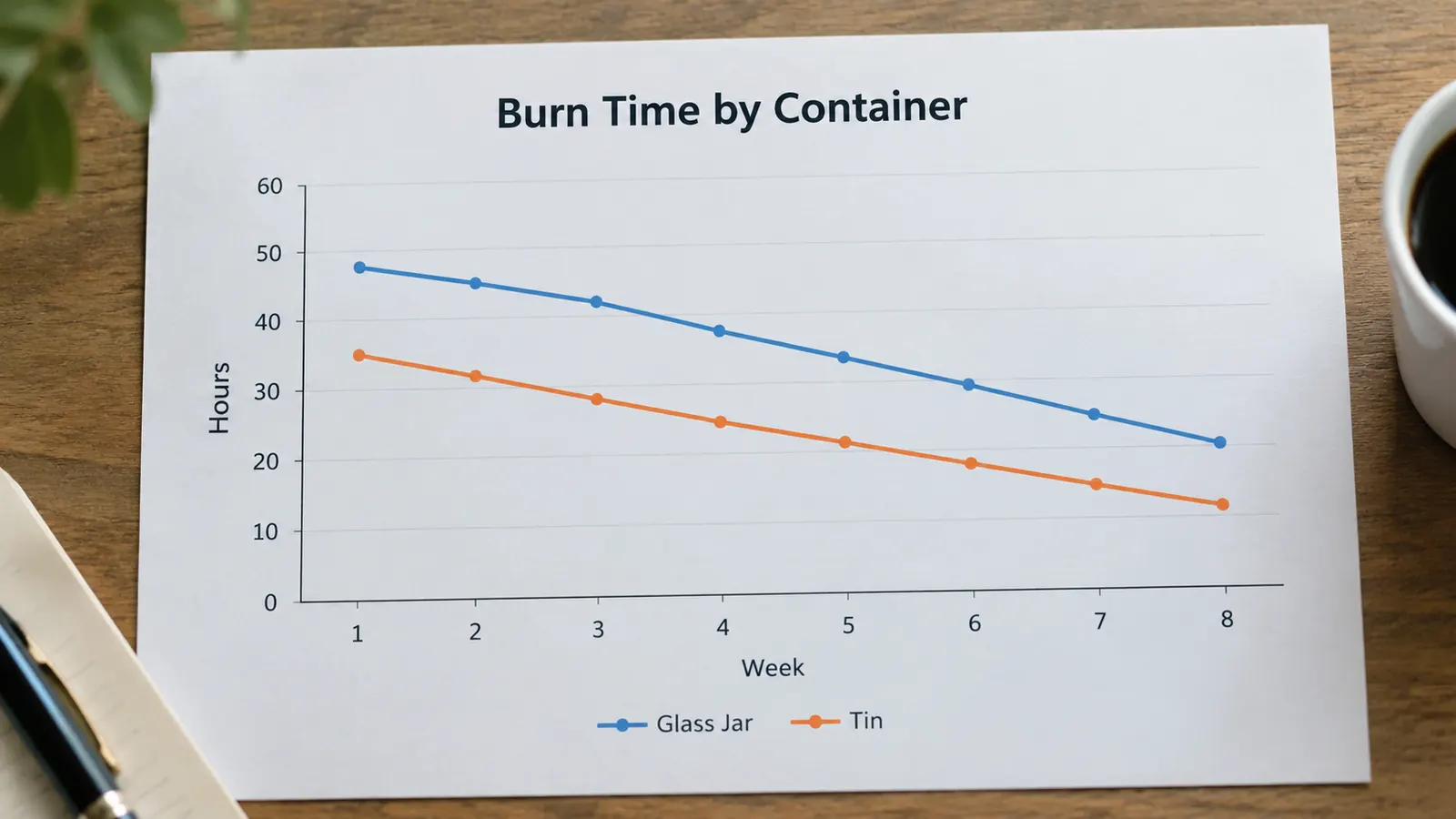
| Burn time | Taller walls give a longer, steadier melt pool with the same wax and wick | Shorter burn per ounce because the pool spreads wide and hits the tin wall sooner |
| Booth appeal | Wood lids and clear glass read as a gift item; people pick them up and ask about refills | Practical and rustic, but buyers treat them as a cheaper, everyday candle |
| Shipping weight | Glass is heavier and needs more padding in a box | Light and nearly indestructible; tins win any time you mail candles |
| Durability | Glass can chip or break if a jar drops on concrete | Dents instead of shattering, which matters at a busy market |
| Best for | Giftable container candles, market booths, refill programs | Travel candles, sample packs, first-time buyers on a budget |
Where SHOWIN Candle Jars Win
The first thing I noticed when I poured into the SHOWIN jars was how forgiving the glass is. The jars have straight sides and a wide mouth, which makes wick centering simple and makes cleaning them for a second pour much easier than a tin. I use a wick sticker and a centering tool, but even on the first batch I did not fight the container. I poured that first test batch on a Tuesday afternoon in early March, eight jars with the same coconut-soy blend I use for my main line, and every single wick stayed dead center from pour to cure. With tins, I have to babysit the wick for the first hour or the heat from the melt pool nudges it off center. The wood lids are the detail that sells them at my booth. People pick up a jar, turn it over, and ask whether I sell refills. I have had customers come back three weeks later with an empty jar and buy a fresh candle at a small discount. That does not happen with tins.
The hot throw is where the jars really separate themselves. With the same soy wax, the same fragrance load, and the same wick, the SHOWIN jars give a noticeably stronger scent in a living room. The taller walls keep the melt pool contained, so the fragrance has time to build before it reaches the surface. In my coconut-soy blend, I use a CD-10 wick in the 7 ounce jars and get a full melt pool in about 45 minutes. The same wick in a tin reaches the wall faster and the candle burns hotter, which shortens the life of the scent. I tested this side by side one Saturday night in April: two candles, same batch of wax, same 6 percent fragrance load, same CD-10 wick, one in a SHOWIN jar and one in a 4 ounce tin. After two hours, the jar candle had a clean, even pool and the scent filled the room. The tin had a deep pool that reached the edge, and the fragrance was already fading by hour three. For a home candle maker who wants a candle that performs like a store bought one, the jars are the better container.
There is also the question of how the candle looks while it burns. A SHOWIN jar hides nothing. If the wax is mottled, if the wick is off center, if there is a sinkhole around the wick tab, you see it through the glass. That sounds like a risk, and it is, but it is also a quality check. I have caught two bad pours in the jars that I would have missed in a tin. One was a batch of lavender that developed a rough top because I poured it too cool, and one was a vanilla that formed a small sinkhole near the wick. Both went into my reject pile instead of onto my booth table. With tins, the container hides those flaws, which means a bad pour can slip through and end up in a customer's hands. I would rather catch a mistake before it leaves my garage, and the jars help me do that.
Pour your next batch into jars that actually throw scent
The 16 pack of SHOWIN Candle Jars with wood lids is the container I reach for first on pour day. Check today's price on Amazon and see if they fit your wax and wick setup.
Amazon Check Today's Price on Amazon →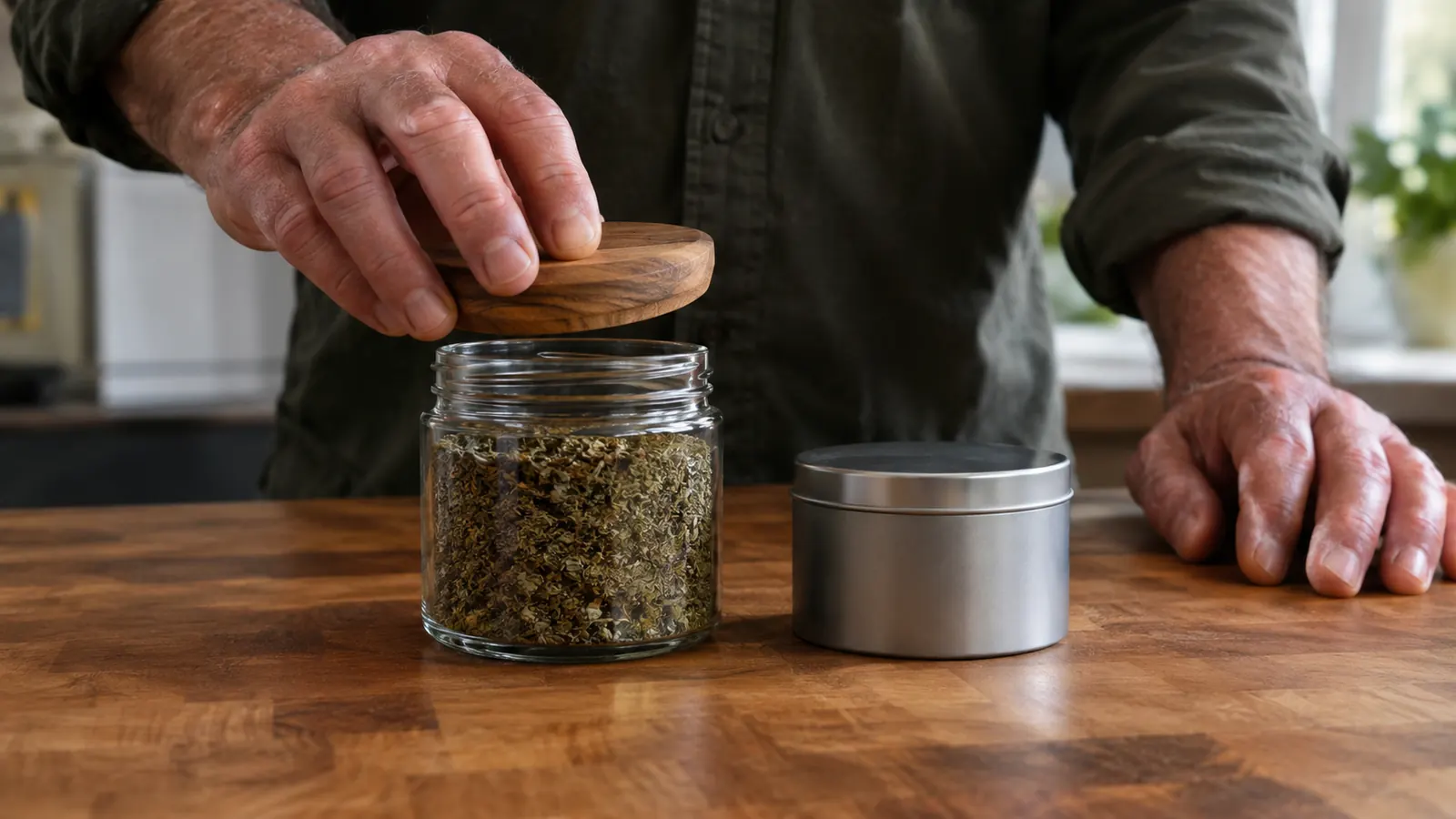
Where Candle Tins Win
I am not going to pretend tins are useless, because they are not. Tins win every time I need to ship a candle. A tin weighs a fraction of what a glass jar weighs, it does not need bubble wrap around every side, and it will not shatter in a padded envelope. I have mailed tins to friends and family with nothing but a layer of kraft paper, and every one arrived intact. Last fall I sent six tins to my sister in Nashville, three different scents, wrapped in nothing but kraft paper and packing tape, and all six showed up with the lids still snug. I would not try that with glass. If you sell online or plan to offer a small sample size, tins are the practical choice. They also survive a market booth better than glass. I have watched a tin bounce off a table corner and land on concrete with nothing worse than a dent. I would not want to test a glass jar the same way.
Tins also have a place in your lineup even if you prefer jars for your main candles. I keep a stack of tins for travel candles, for the little freebies I tuck into orders, and for the first time buyer who wants to try a scent without committing to a full jar. The wide, shallow shape means the melt pool reaches the edge quickly, which is fine for a candle meant to burn for an hour in a bathroom. And because tins are cheap per unit in bulk, you can experiment with new fragrances without wasting a nice jar on a scent that might not sell. That is a real advantage when you are testing a new fragrance oil at 6 percent and you are not sure how it will behave. I learned that the hard way with a cedar and sage oil I bought on a whim. I poured it into four tins first, let them cure for a week, and burned one in the garage. The scent was fine, but it was not something I wanted on my booth table. I lost four tins instead of four SHOWIN jars, and that is exactly the kind of mistake tins are good for.
Tins are also the container I reach for when I need a candle to cure fast. A 4 ounce tin with a wide surface area cures in about three days in my garage, while a 7 ounce SHOWIN jar needs the full week. That matters when a market is coming up and I am short on cured stock. One Thursday in June I realized I had sold through my last travel candle at the previous Saturday's market, so I poured a dozen tins that evening, let them cure over the weekend, and they were ready to sell the following Saturday. I could not have done that with jars. The tradeoff is that the tin candle burns hotter and faster, so the scent does not last as long, but for a small candle that is meant to be used up in a week or two, that is a fair trade.
The trade-off with tins shows up in the burn. A thin metal wall heats fast, so the outside of a tin gets hot enough that I would not hand one to a customer mid-burn, and a lid left on a warm tin can trap heat. Tins also hide the wax, which is a kindness when a batch comes out frosted but a drawback when you want a shopper to see a clean, full melt pool. I always set tins on a coaster or a ceramic tile when I burn-test them, never straight on the wood table.
The jars sell themselves at the booth. The tins sell themselves in the mail.
Who Should Buy Which
Buy the SHOWIN Candle Jars if you sell at a market booth, if you want your candles to look like a gift, or if you are tired of candles that burn too fast and throw weak scent. The 7 ounce size is a good middle ground for a first candle business: big enough to feel substantial, small enough to price reasonably. Buy tins if you are shipping candles, making samples, or testing new scents on a budget. Most home candle makers end up with both in their workspace, and that is the honest answer. I pour my main line in SHOWIN jars and keep a shelf of tins for everything else.
One more note on the SHOWIN jars specifically. The wood lids are not just for show. They fit snugly enough that I can stack cured candles on my metal utility shelf without worrying about dust getting inside, and they make the jar reusable. A customer who buys a SHOWIN jar candle gets a container they can clean and use again, which is a selling point I mention at the booth every single Saturday. Tins are harder to clean and almost never get reused. If you care about the whole life of the product, the jars are the more responsible choice. I have also noticed that the jars hold up to repeated use. I have one SHOWIN jar that has been through three pours, and the glass still looks as clear as the day it arrived. The wood lid has a few small marks from being handled, but it still fits snugly. That kind of durability matters when you are building a refill program, because the container is the thing your customer keeps.
If you are still deciding, here is the test I would run. Buy one pack of SHOWIN jars and one small stack of tins, pour the same wax and fragrance into both, and burn them side by side in the room where you would normally burn a candle. Write down how long each one takes to reach a full melt pool, how strong the scent is at hour two, and how the container looks when the candle is done. That is exactly what I did, and the results were not close. The jars threw a stronger scent, burned longer, and looked better on my booth table. The tins were easier to ship and easier to test with. I still keep both in my garage, but if I could only buy one, it would be the SHOWIN jars.
Whichever way you go, burn-test every new wick and container pairing before it goes on the table. A wick that behaves perfectly in a 7 ounce SHOWIN jar can tunnel in a tin of a different width, or run too hot in a smaller one. I burn each new combination for at least three hours and check the melt pool, the flame height and the outside of the container before I make a full batch.
Start with the container that makes your candle look finished
SHOWIN Candle Jars with wood lids are the ones I recommend to home candle makers who want a professional result without a professional setup. See today's price on Amazon.
Amazon Check Today's Price on Amazon →