
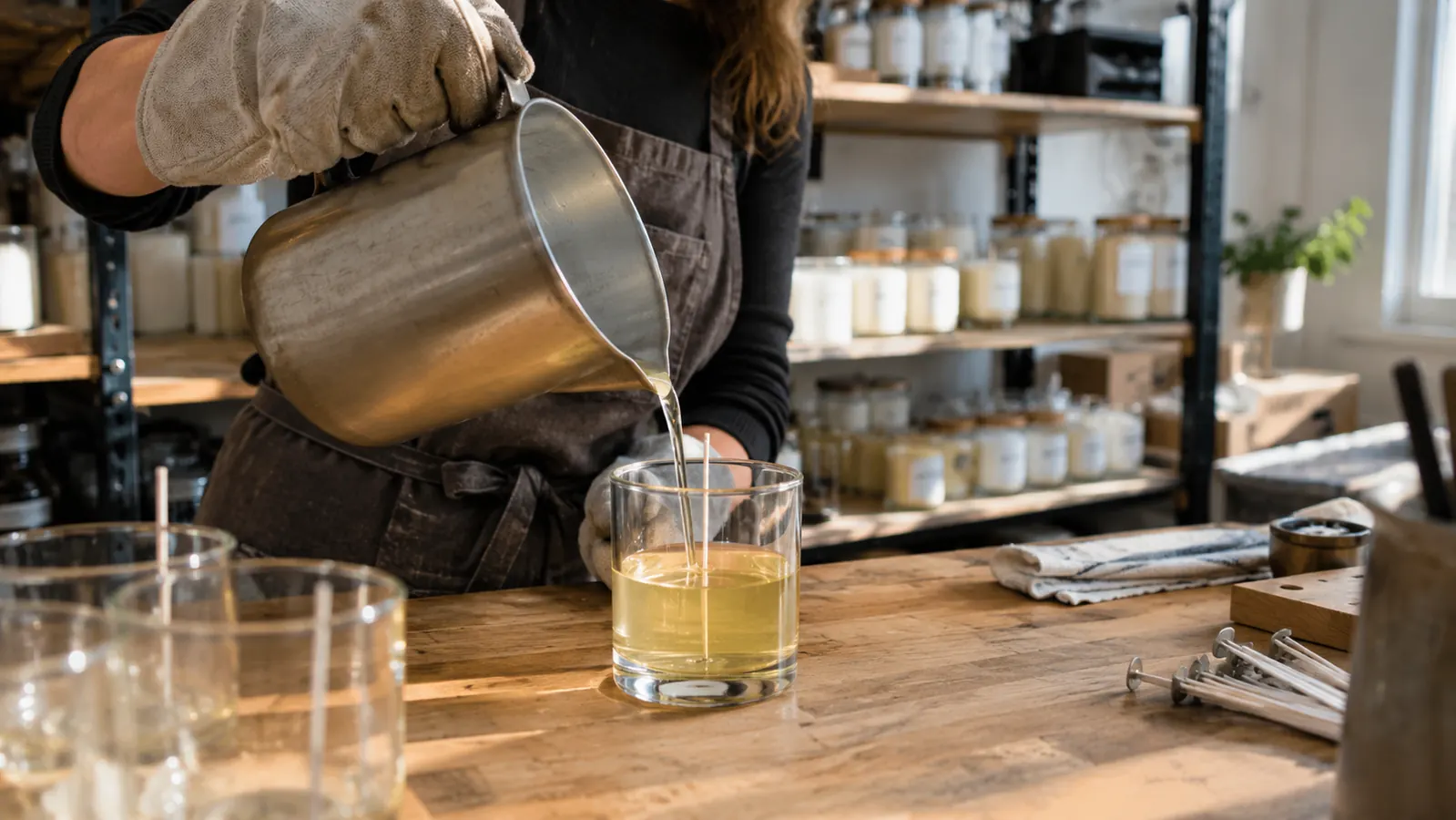
I have poured candles in my garage every weekend for four years, and I have gone through more pouring pitchers than I care to count. Some leaked from the seam. Some dribbled down the side no matter how slowly I tilted them. One cheap aluminum pot warped so badly after a few months that it rocked on the hot plate like a boat. So when I finally ordered the EricX Light Pouring Pot, I did not expect much. I expected another decent-enough tool that would end up on the shelf with the rest of them. What I got was the pot I now reach for first, and also the pot with a few quirks nobody mentions in the product listing.
This is the honest version. The one I wish someone had given me before I bought my first pouring pot, with the waxy fingerprints and the slightly burned handle and the truth about how much wax it actually holds.
The Quick Verdict
The EricX Light Pouring Pot is the best value pouring pitcher I have used in four years of weekend pouring, as long as you understand it is a 4-pound pot, not a 4-quart one, and you treat the handle like the working part it is.
Amazon Check Today's Price →The pouring pot I reach for first on pour day
After four years of leaky pitchers and warped aluminum, this is the one that actually pours clean. See today's price on Amazon and decide if it belongs on your workbench.
Amazon Check Today's Price on Amazon →How I've Used It
I pour mostly soy and coconut-soy container candles, about 24 to 36 jars on a good market week, plus a few beeswax pillars in the winter. That means my pouring pot gets used hard. It sits on a two-burner electric hot plate, gets filled with wax flakes, gets heated to around 185 degrees for soy, and then gets poured, wiped, and refilled, over and over, for a full Saturday afternoon.
I have used this EricX Light pot for about seven months now, which is longer than any other pouring pitcher has lasted in my garage. I have melted soy wax, coconut-soy blend, beeswax, and a small test batch of paraffin in it. I have left wax in it overnight by accident. I have dropped it once on the concrete floor. It is dented on one side near the bottom, and it still pours without a drip.
The pot is aluminum, so it heats up fast and cools down fast. That is a feature when you are waiting for wax to reach temperature, and a small problem when you are trying to keep a whole batch at pouring temperature while you wick ten jars. I have learned to work in smaller batches and reheat between rounds.
Let me give you one specific Saturday, because that is where a pot earns its keep. The second Saturday in March, with the market two weeks out, I had 30 jars to fill. I melted 4 pounds of soy in this pot and poured 9 of my 8-ounce amber jars, refilled the pot with coconut-soy and poured 11 more, then ran a third batch for the final 10. That is three full melts and 30 jars in one afternoon, and the pot handled all of it without a single drip down the side. My old stainless pitcher would have been streaked on the outside by the third fill and dripping down the handle by lunch. This one ended the day with a clean outside and a handle that was warm but never painful to touch. I wiped it out, set it on the shelf, and did not think about it again until the next pour day. That is the highest compliment I can give a pouring pot. It is the tool you stop noticing because it does its job.
What I Liked
- The spout really is dripless when you pour with a steady hand, and after seven months the outside of the pot is still clean
- Aluminum heats fast and evenly, with no hot spots or scorched batches in my testing
- Wipes clean while warm and does not rust like my old steel pitcher
- The 4-pound size is right for weekend batches and test pours without taking over the workbench
Where It Falls Short
- The handle gets warm in use and needs a glove or a folded towel
- No volume markings inside, so you will need a scale to measure your wax
- A full pot is heavy enough that one-handed pouring gets tiring by the third fill
- The rivets inside create two small crevices where wax collects and hardens
What Nobody Tells You About the Size
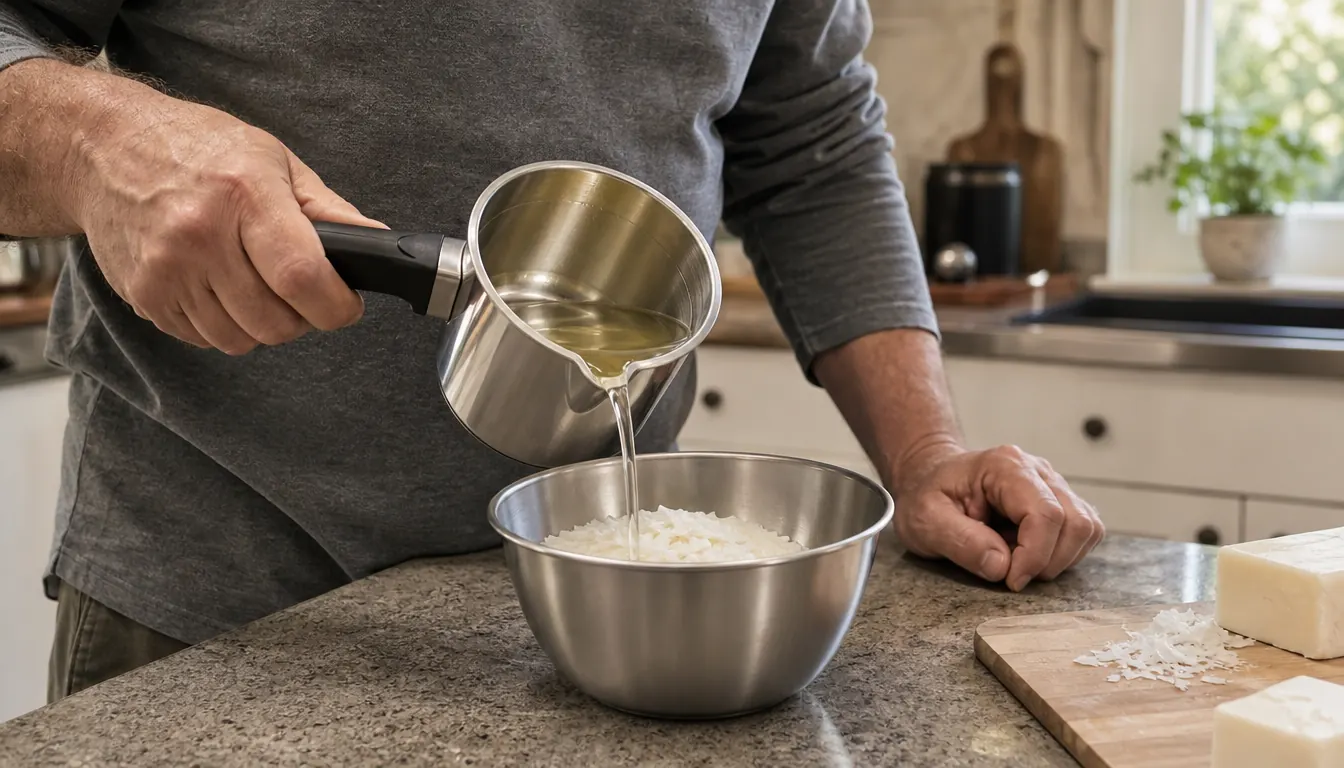
The listing says 4 pounds, and that is the weight of wax it holds, not the volume. A lot of candle makers see the word pound and assume it is a big pot. It is not. It holds about 4 pounds of melted wax, which is roughly 64 ounces by volume, or about two and a half of the 16-ounce jars I use. If you pour 8-ounce candles, you can get about six or seven out of one fill.
For my market batches, that means I fill it, pour, refill, and repeat. It is not a production pot for someone making 100 candles in an afternoon. It is a weekend-market pot, a test-batch pot, a one-person pot. If you are scaling up to serious production, you will want something bigger, and you will probably keep this one around for the small jobs anyway.
Here is the math I wish someone had shown me before my first fill. Four pounds of melted wax is about 64 fluid ounces, but your jars do not hold a full 8 ounces of wax each. Between the wick, the melt pool, and the little bit that clings to the sides of the pot, I get about 6.5 ounces of wax per 8-ounce jar, which means a full pot gives me nine jars, not twelve. The first time I used it, I lined up 12 jars, filled the pot to the brim, and ran out partway through the ninth. I had to scrape the last of the wax out, reheat it, and pour the last three jars in a second pass. I also weighed the full pot once out of curiosity: 4 pounds of melted soy plus the aluminum pot came to 5 pounds 11 ounces on my kitchen scale. That is a heavy thing to hold one-handed, so now I pour with two hands and I plan for nine jars per batch.
The Dripless Spout, Tested Honestly
The dripless claim is the reason most people buy this pot, so I tested it the way I test everything in my garage: by using it for months and watching where the wax went. The spout is a shallow V shape with a slight lip. When you pour slowly and smoothly, it genuinely does not drip down the side. I have poured hundreds of jars with it and the outside stays clean.
But here is what the listing does not tell you. If you pour too fast, or if you jerk the pot at the end of the pour, wax will run down the outside. It is not magic. It is a well-designed spout that rewards a steady hand. I have also found that beeswax, which is thicker and cools faster, needs a slower pour than soy. When I rush, I get a streak of wax on the side of the pot and a mess on the jar.
I also tested the limit on purpose, because the word dripless is doing a lot of work in that listing. One Wednesday evening in April, after a full day of pouring soy at 185 degrees, I filled the pot again, let it come up to temperature, and poured the fastest pour I could manage into a waiting jar. Wax ran over the lip and down the side, and I spent ten minutes cleaning it up. Then I heated a fresh batch, let it settle for a minute, and poured the same jar at a slow, steady tilt. The stream came out about as thick as a pencil, landed in the center of the jar, and stopped the moment I straightened the pot. Not a drop on the rim. So here is the honest version: the spout is excellent, and it is not a substitute for a steady hand. Pour slowly, keep the lip an inch or two above the jar, and it will not drip. Rush it, and it will drip just like any other pot on the market.
After seven months of weekend pours, the outside of my EricX Light pot is still clean, and that is the first time I can say that about any pouring pitcher I have owned.
The Handle and the Heat Question
The handle is the part of this pot that gets the most complaints in reviews, and I understand why. It is a metal handle with a black heat-resistant coating, and it does get warm. Not burning-hot, but warm enough that I do not grab it bare-handed after it has been sitting on a hot plate for a while. I use a heat-resistant glove or a folded towel, and I recommend you do the same.
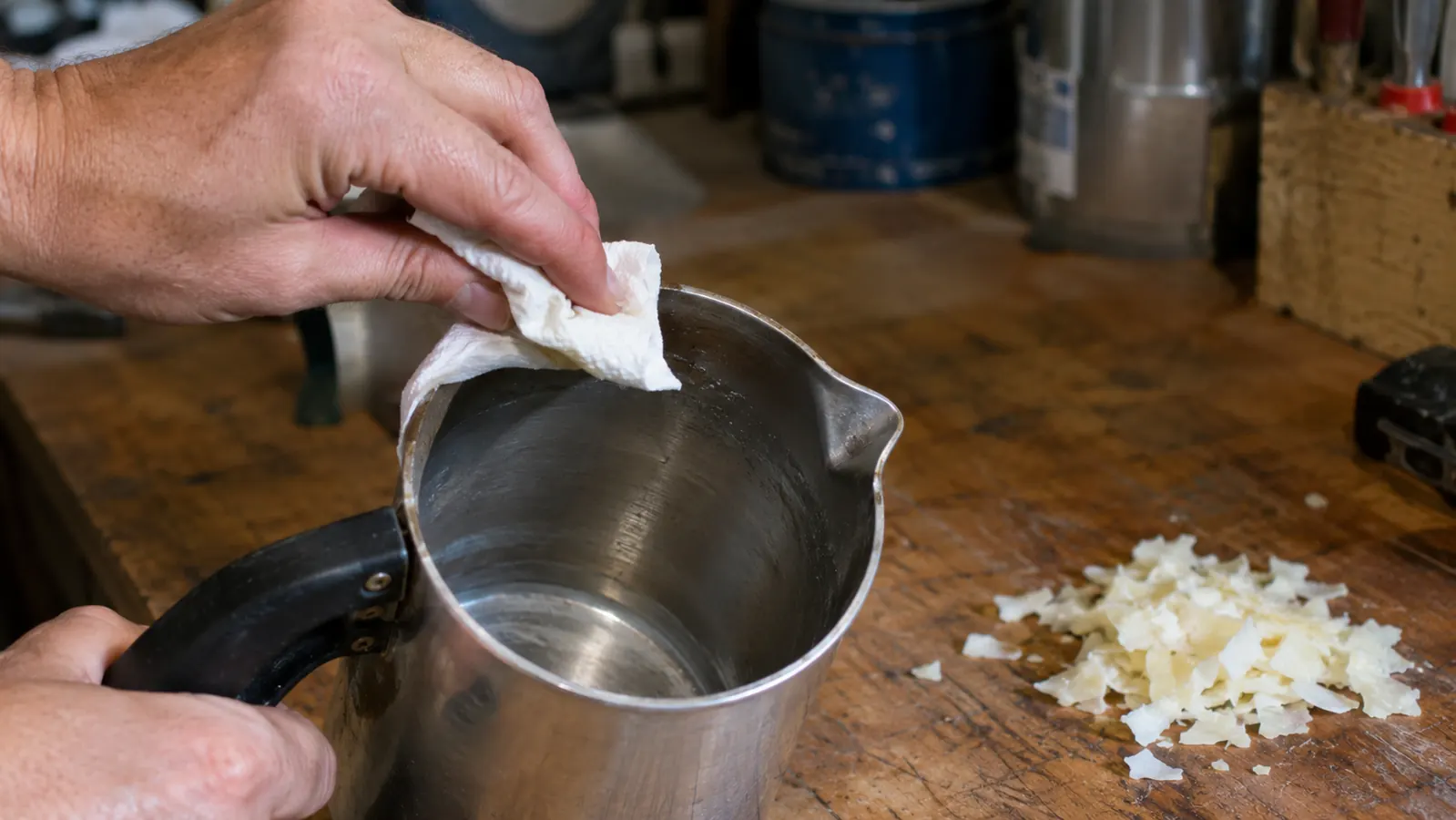
The handle is also riveted, not welded, and the rivets are on the inside of the pot. That means there are two small spots where wax can collect and harden. I have learned to wipe them down while the pot is still warm, because once wax hardens in those rivet crevices, it is annoying to get out. A paper towel right after pouring takes care of it in ten seconds.
How It Pours, Day to Day
On a typical pour day, I heat the pot on the hot plate, add my wax flakes, and stir with a silicone spatula. The aluminum conducts heat well, so the flakes melt faster than they did in my old stainless steel pitcher. I have not had a single hot spot or scorched batch in this pot, which is more than I can say for the cheap pot I used before it.
The pour itself is the reason I keep reaching for it. The spout gives me a thin, controlled stream that is easy to aim into a 3-inch jar opening. I can pour without a funnel, which saves me a step and a piece of equipment to wash. When I need to stop, the stream cuts off cleanly. That is the dripless part that actually works.
The one thing I have to be careful about is the weight when it is full. Four pounds of wax plus the weight of the aluminum pot means a full pot is heavy enough that I do not want to hold it with one hand for long. I pour with two hands, one on the handle and one supporting the bottom, and I pour over the table, not across the room.
The other thing I learned is to watch the temperature, not the clock. Soy pours well for me at about 185 degrees, coconut-soy at about 175, and beeswax at about 160. When the wax drops below that, it thickens and the stream widens, and that is when I get drips on the jar rim. One Sunday in April I got distracted wicking jars and let a batch of coconut-soy cool to about 150. The pour was sluggish, the stream wobbled, and I ended up with wax on three jar rims and one burned finger from trying to wipe it off while the glass was still hot. Now I keep a thermometer clipped to the pot and I reheat between rounds instead of trying to stretch a batch. I also stopped pouring over the sink to test the spout, which I did for the first two weeks because I did not trust it. Now I pour directly into the jars on the table, with the lip of the spout about an inch above the glass. That short drop keeps the stream from splashing and lets me stop cleanly at the fill line. It sounds like a small thing, but it changed my pour day more than any other adjustment.
Cleaning and Care, the Part Nobody Photographs
Cleaning a pouring pot is the least glamorous part of candle making, and this one is easier than most. Because it is aluminum, I can wipe it out with a paper towel while it is still warm and get most of the wax out in one pass. I do not put it in the dishwasher, and I do not use soap on the inside, because soap residue can contaminate the next batch of wax.
For a deep clean, I heat a little water in the pot, pour it out, and wipe. The aluminum does not rust, which is a real advantage over the steel pitcher I used to own. The outside does develop a patina over time, a sort of dulling of the metal, and that is normal. It does not affect the pour.
One honest warning: do not leave wax in this pot overnight on a regular basis. I did it once, and the hardened wax was a pain to remove. It is not a defect in the pot. It is a fact of life with any pouring pitcher. Clean it while it is warm and it will last.
Who This Is For
This pot is for the home candle maker who pours a few dozen candles at a time, the weekend market seller, the person who makes gifts for the holidays, the beginner who wants one decent tool instead of a drawer full of bad ones. It is also for the person who is tired of wiping wax off the side of a kitchen pitcher and wants a spout that actually does what it promises.
If you are that person, the EricX Light Pouring Pot will probably be the last pouring pot you buy for a long time. It is not the fanciest tool in my garage, but it is the one I trust not to leak, not to warp, and not to make a mess.
Who Should Skip It
Skip it if you are pouring more than 50 candles in a single session, because you will spend too much time refilling a 4-pound pot. Skip it if you want a handle that stays completely cool, because this one gets warm. Skip it if you are looking for a pot with volume markings, because the EricX Light pot does not have measurement lines, and you will need to weigh your wax or use a separate measuring cup.
And skip it if you expect a dripless spout to fix a rushed pour. It will not. It will reward a steady hand and punish a careless one, just like every good tool does.
The honest pick for a clean pour every weekend
If you are tired of wiping wax off the side of your pitcher, this is the pot that finally pours clean. Check today's price on Amazon and see if it earns a spot on your workbench.
Amazon Check Today's Price on Amazon →