
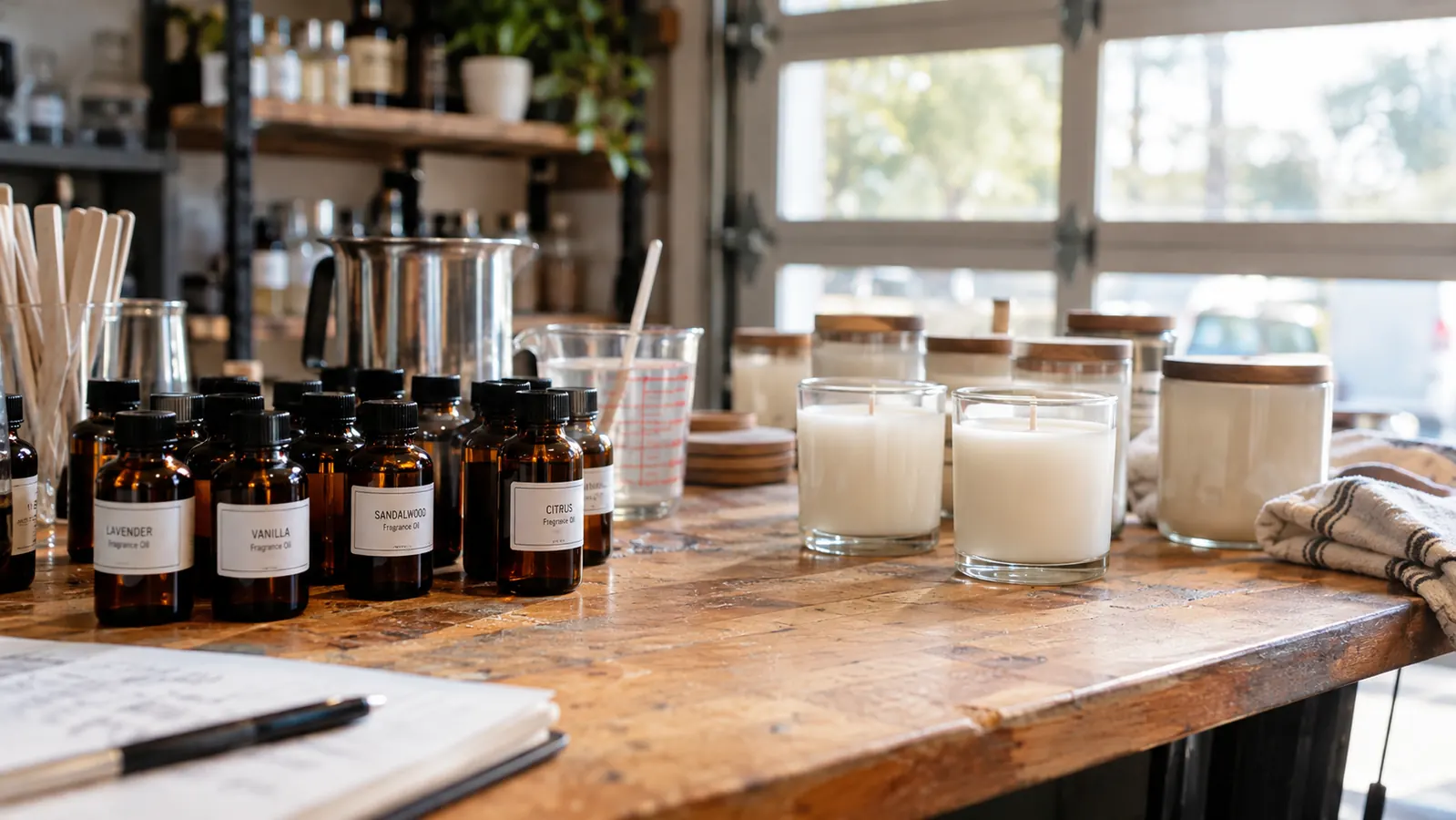
I started pouring candles on a two-burner hot plate in the corner of my garage, and for the first year I bought fragrance oils one 1-ounce bottle at a time. Every single bottle felt like a gamble. If the scent threw too weak, or smelled like play dough after the cure, I had spent money on a candle nobody at the farmers market would pick up. That is exactly why the Fiora Naturals Premium Fragrance Oil Set changed how I test new scents without bleeding my supplies budget dry.
A sampler set is not a luxury for a home candle maker. It is a way to test a dozen ideas for less than the cost of two full-size bottles, and it lets you find the three or four scents that actually sell before you commit to a case of wax and a shelf full of jars. Here are the ten reasons I keep reaching for the Fiora Naturals sampler on my butcher-block table.
Test a dozen scents without betting the whole jar budget
The Fiora Naturals Premium Fragrance Oil Set gives you a range of scents to pour, cure, and burn-test before you commit to full bottles. See today's price and current scent list on Amazon.
Amazon Check Today's Price on Amazon →You stop buying full bottles of scents you will never pour again
I have a shelf of orphans: full 4-ounce bottles of scents I used once, decided were too sweet or too faint, and never touched again. A sampler fixes that by making the first pour a small pour. When I tested the Fiora Naturals set, I could burn a candle for a week, decide the scent was wrong for my booth, and toss the idea without tossing a bottle that cost several times more. One of my orphans is a clove-heavy scent I poured in a moment of autumn optimism; it smelled like a holiday candle on day one and like a spice rack on day twelve, and the full bottle is still sitting on my utility shelf.
You can finally compare scents side by side instead of guessing
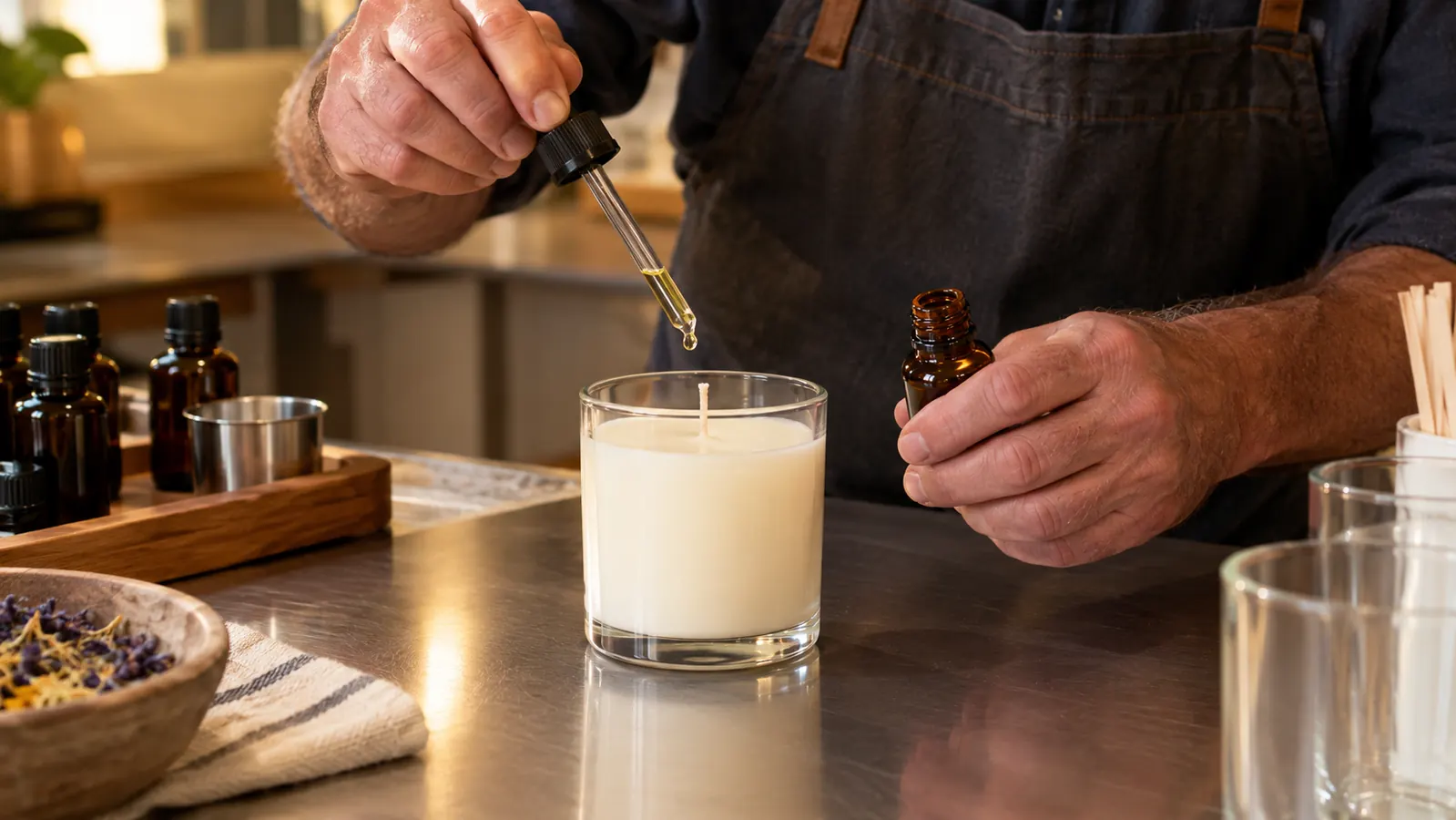
When you buy one bottle at a time, you are comparing scents from memory. A sampler lets you pour four candles on the same afternoon, cure them on the same shelf, and burn them on the same evening. That is how I learned that a certain vanilla musk reads as a bakery scent in my coconut-soy wax, while the same oil reads as a cologne scent in my soy-only blend. You cannot learn that from a written description. I did that exact four-candle test on a rainy Saturday in March, labeled the jars with masking tape, and burned all four side by side on the kitchen counter while Dale kept asking which one was supposed to win.
Small bottles mean less wax wasted on a failed test
Every test pour costs wax, wicks, jars, and heat. A 1-ounce bottle of fragrance oil is enough for roughly eight 8-ounce candles at the standard 6 percent load. If the scent fails, you have wasted a small amount of oil and a few jars, not a whole production run. The Fiora Naturals set is sized exactly for that kind of low-stakes testing. I weigh my oil on a kitchen scale that reads to the tenth of a gram, and a failed 1-ounce test costs me about two tablespoons of oil, one jar, one wick, and maybe an hour of my afternoon. That is a cheap lesson.
You learn which scents survive a full cure before you commit
A fragrance oil can smell fantastic in the bottle and turn sharp or soapy after two weeks of curing. The only way to know is to pour a small candle, wait the full cure, and burn it. A sampler makes that easy because you are never waiting on a single expensive bottle. I keep a running note on my phone about how each Fiora Naturals scent performs at the one-week and two-week marks. The note has saved me more than once: a citrus blend that smelled bright on pour day went flat and waxy by day ten, and I crossed it off my list before I ever ordered a full bottle.
You can test a scent in both soy and coconut-soy wax
A scent that throws beautifully in one wax can disappear in another. With a sampler, I can split one bottle across two small test melts and see which base it likes. That has saved me from ordering a full bottle of a scent that only works in a wax I do not use for that product line. I pour my coconut-soy blend at 185 degrees and my straight soy at 175, and a scent can behave completely differently at those two temperatures. A sampler lets me learn that before I commit.
You stop chasing single-scent orders and start building a line
When I bought one bottle at a time, my booth had a random collection of scents. Working through the Fiora Naturals sampler let me group winners into a coherent line: a bakery group, a fresh group, and a woodsy group. Customers buy more when the table tells a story, and a sampler is the cheapest way to find that story. At my last market, a woman picked up the bakery trio, smelled all three, and bought two of them because they belonged together. That does not happen when your table is a grab bag.
You find the right fragrance load without ruining a big batch
The difference between a 6 percent and a 9 percent fragrance load can be the difference between a candle that sells and a candle that sweats oil on the shelf. With small sampler bottles, I can pour three test candles at different loads, cure them, and burn them before I commit the formula to a full production batch. I did that with a cedar and amber scent last fall: 6 percent threw weak, 9 percent sweated, and 7.5 percent was the keeper. Three small candles answered a question that would have cost me a whole case of wax to answer the hard way.
You can test seasonal scents months before the season hits
The sampler lets me pour a pumpkin spice test in July, cure it for two weeks, and know by August whether it will earn a spot at my October market booth. That timing is impossible when you are waiting for one bottle to arrive and then waiting for a full cure before you even decide if you like it. I keep a small notebook page for each season, and the sampler is what fills those pages with tested candidates instead of hopeful guesses.
You get a wider range of scents for the same money as two full bottles
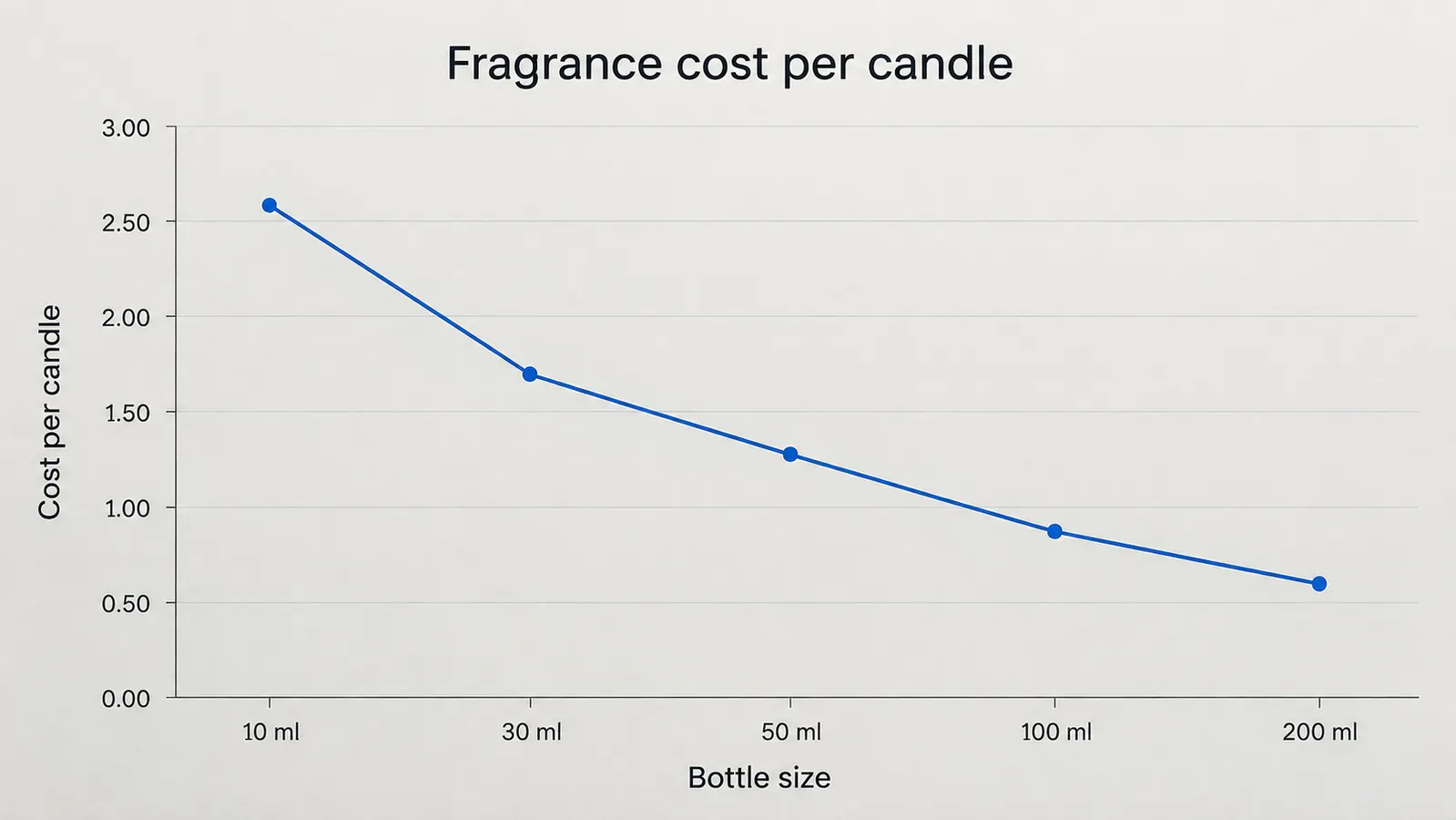
The whole point of a sampler is spread. Instead of two full-size bottles of scents you hope will work, you get a range of small bottles covering the scent families you want to explore. For a home candle maker on a budget, that spread is the difference between guessing and knowing. I would rather have ten small bottles of ten different ideas than two big bottles of two ideas I am not sure about. The sampler is the only way I know to get that kind of range without a big outlay.
You learn what your customers actually want before you buy in bulk
The most expensive thing a candle maker can do is buy a case of wax and a gallon of fragrance oil for a scent nobody asks for twice. A sampler lets you bring small test candles to your booth, watch which ones sell, and only then commit to the full-size bottle. That is how I found my two best sellers, and I found them without a single expensive mistake. I poured six test candles in small jars, put them at the front of my table with a handwritten sign, and let the market tell me which ones to keep. The two that sold first are the two I now pour every single week.
What I'd Skip
The most expensive thing a candle maker can do is buy a gallon of fragrance oil for a scent nobody asks for twice.
Start your next scent test with a sampler, not a gamble
The Fiora Naturals Premium Fragrance Oil Set is the lowest-stakes way I know to test a range of scents in your own wax. Check today's price and the current scent list on Amazon.
Amazon Check Today's Price on Amazon →