
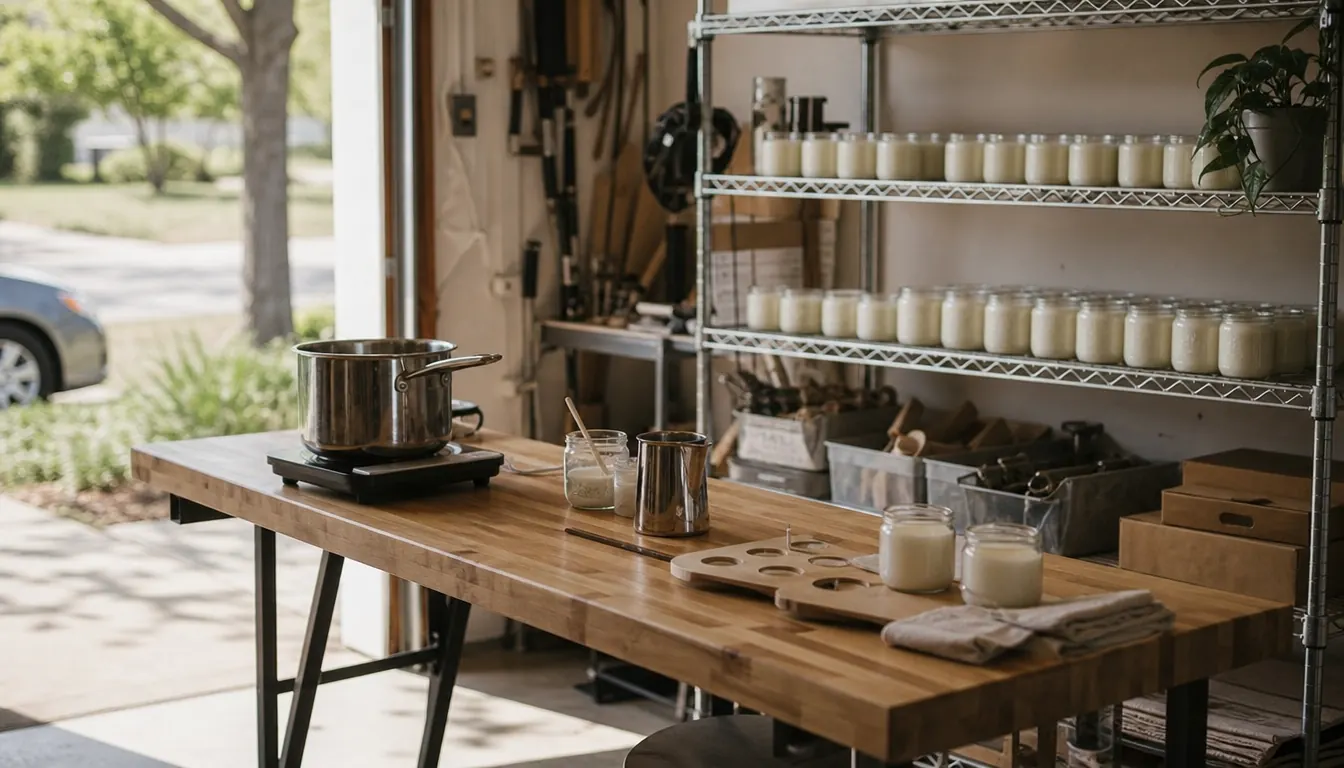
I started testing the Fiora Naturals Fragrance Oil Set in late August, and the bottles have been on my curing shelf ever since. I pour in a converted corner of my garage, one long butcher-block folding table, a two-burner electric hot plate, and a metal utility shelf where every candle sits for a full cure. I've been selling container candles at a single Saturday farmers market booth for about four years, so a fragrance oil has to survive a lot before I trust it. It has to survive melting, a measured pour, a two-week cure, and then a ride in the back of my car on a hot market morning.
The set is a dozen small bottles, each a different scent, and I worked through all of them over several months of weekly pours. Some earned a second batch. A couple went straight to the back of the shelf. Here's what actually happened, scent by scent, with the same notes I keep for every batch I pour.
The Quick Verdict
A practical sampler for candle makers who want to test a range of scents before committing to big bottles. Most of the oils throw well in soy and coconut-soy wax, a couple fade by week three, and the small bottles keep a bad guess cheap.
Amazon Check Today's Price →Test a dozen scents before you commit to one big bottle
The Fiora Naturals sampler let me pour small test batches and see which scents survived a two-week cure and a market morning. If you're tired of gambling on a gallon jug, this is the low-risk way to find your booth scents.
Amazon Check Today's Price on Amazon →How I've Used It
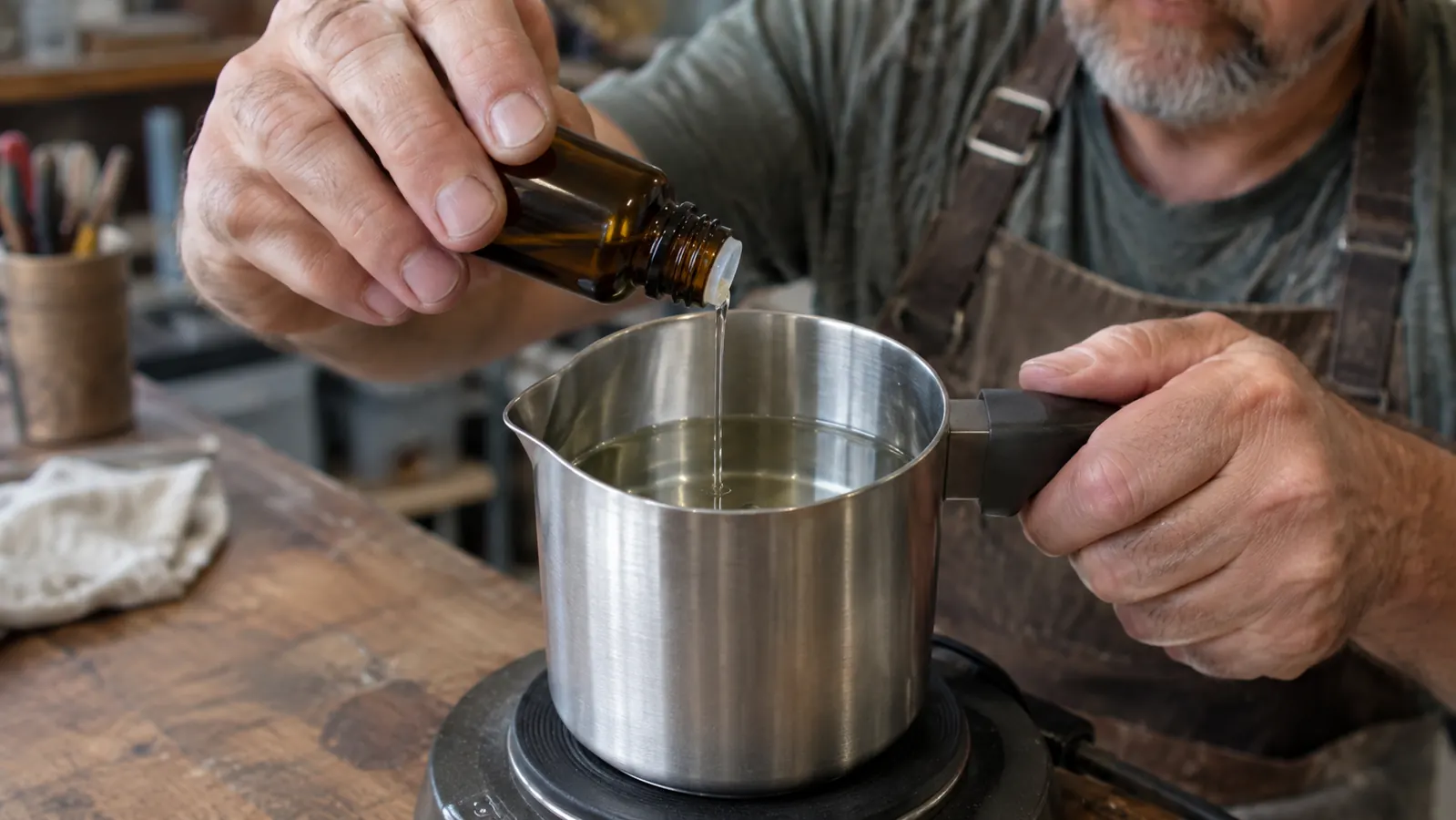
Most of my pours are soy and a coconut-soy blend, with a few beeswax pillars in the winter. My routine hasn't changed in years: melt the wax to about 185 degrees, add the fragrance oil at around 175, stir for a full two minutes, pour, and let the candles cure for at least 48 hours before I even test the cold throw. I poured these the same way I pour everything else, because there's no point testing an oil under conditions you'll never use.
For the sampler, I poured four-ounce candles, one per scent, at a consistent 6 percent fragrance load. I taped a label to the bottom of each jar with the scent, the date, and the batch number. Then I tested cold throw after two days, burned each candle in my studio, and poured the same scent again a month later to see if the results repeated. That second pour is the test that matters. A one-off good batch doesn't pay the booth fee.
I also melted a few of the oils into wax melts and ran one through my bedroom diffuser, because that's how a lot of my market customers use fragrance oils. A scent that only works in wax is less useful to me than one that works in all three, and the set made that easy to check without opening five different orders.
The set arrived with each bottle sealed, and the labels were plain but readable, which is more than I can say for some samplers I've tried. I lined the bottles up on the shelf in the order I planned to test them and worked through them two at a time so I could compare cold throw side by side. Testing two scents at once is the only way to catch the difference between good and great.
How the Scents Hold Up in Soy Wax
The first thing I noticed was the cold throw. Most of the set smelled strong in the bottle, and stronger after a two-day cure. Cold throw is what sells a candle at my booth, because customers lean in and sniff before they ever light anything. The bakery and fruit scents were the standouts. The vanilla-forward one filled my garage the morning after I poured it, and it held that strength for the full two weeks before I burned it.
The hot throw was a little more uneven. The heavier scents, the ones that lean toward cedar and amber, burned clean and filled my studio within about twenty minutes. The lighter ones, especially a couple of florals, threw well for the first hour and then settled down. That's not unusual in soy wax, which burns cooler than paraffin, but it matters when your market runs four hours and customers want to smell the candle while it's burning.
I learned to test every scent at two different loads. At 6 percent, most of the set performed well. At 8 percent, the heavier scents got noticeably stronger without the waxy buildup I sometimes see when an oil is overloaded. The lighter florals got a little sharp at 8 percent, so I kept those at 6. That kind of information is exactly why I wanted a sampler in the first place.
Which Scents Earned a Repeat Pour
The vanilla-forward scent was the first one I poured a second time. I sold out of that candle at three Saturday markets in a row, and every candle came from the same 6 percent load I tested in the garage. The warm cedar and amber blend was the other repeat. It's not a scent that shouts from across the room, but customers who like it buy it every week, and repeat customers are what keep a booth alive through the slow months.
The citrus one surprised me. I don't usually sell citrus in the fall, but a customer asked for something bright, so I poured a small batch and it moved fast. The coconut one, which I expected to love, was good but not great in my coconut-soy blend. It smelled lovely in the bottle and fine in the candle, but it didn't have the throw I wanted.
The rest of the set fell into two groups. About half were solid, dependable scents that I'd happily pour again if a customer asked. The other half were pleasant but forgettable, the kind of candle that smells nice on the shelf and then disappears halfway through the burn. That's not a knock on the Fiora Naturals set. A sampler is supposed to sort scents into those groups, and this one did.
A Few I Won't Order Again
I want to be straight about the misses, because a review that gives a sampler a perfect score is lying to you. One of the lighter florals faded badly. It smelled wonderful at first pour, fine at day two, and by the third week the cold throw had dropped to almost nothing. I poured it twice to make sure it wasn't a bad batch, and it faded the same way both times. If I'd bought a gallon of that scent, I'd be sitting on it right now.
Another scent, one of the green ones, smelled thin in my soy wax no matter what I did. I tried it at 6 percent, then at 8, then with a longer cure, and it always came out flat. It might work better in paraffin or a candle with a higher fragrance load, but it didn't work in my process, and my process is what I have to trust.
One more thing worth knowing: the caps are simple screw tops, so measuring takes care. I bought my own droppers after I overshot a pour and ended up with a candle that smelled fine but sweated a little around the top. That's on me, not the oil, but it's the kind of detail that makes the difference between a fun afternoon and a frustrating one.
What I Liked
- A dozen small bottles let me test a wide range of scents without committing to gallon jugs
- Strong cold throw in soy and coconut-soy wax at a standard 6 percent load
- Oils mixed cleanly at 175 to 180 degrees with no clumping or separation
- Results repeated across separate pours months apart, which is the test that matters
- Worked for candles, wax melts, and a diffuser, so one set covered all my testing
Where It Falls Short
- A couple of lighter florals faded noticeably by the third week
- One green scent stayed flat in soy wax no matter the load
- Simple screw tops mean you'll want your own droppers for measuring
- Per-ounce cost runs higher than buying a single large bottle of one scent
The vanilla-forward scent sold out three Saturdays in a row, and every candle came from the same 6 percent load I tested in the garage.
What I'd Tell a New Candle Maker
If you're just starting out, this is the kind of set I wish I'd had in my first year. I learned to pour by buying one big bottle of a scent I liked in a store, and it took me months to realize that a scent can smell great in the bottle and do almost nothing in wax. A sampler teaches you that lesson in a weekend, and it costs you a lot less than a gallon of the wrong scent.
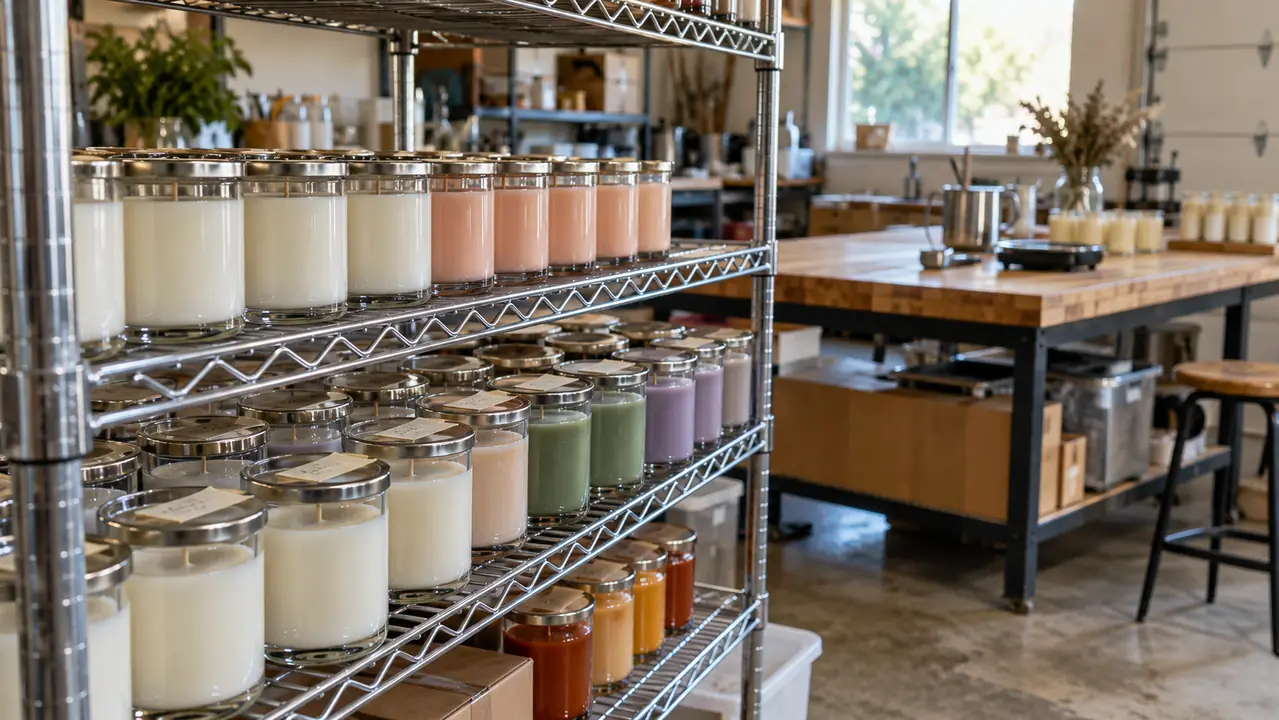
Keep notes. I know it sounds like homework, but the label on the bottom of the jar with the date and the load percentage is the only reason I can tell you which scents faded and which held. When a customer asks me to make the vanilla candle again, I can look at my notes and pour the exact same batch. That consistency is what turns a hobby into a booth.
And test at the load you'll actually use. If you plan to sell a 6 percent candle, test at 6 percent. Testing at 10 percent because it smells better in a test pour just means your real candles won't match the one you fell in love with.
One more piece of advice: don't judge a scent on the first burn. I nearly gave up on the cedar and amber blend after the first test candle, but the second pour, with a slightly longer cure, was a completely different candle. Some oils need a full week to settle into soy wax, and the sampler is small enough that you can afford to wait.
The Bottom Line After Five Months
Five months in, the Fiora Naturals sampler has earned its place on my shelf. I found two scents that sell consistently, I learned which ones to avoid in my wax, and I stopped wasting money on big bottles of oils that don't work for my process. The set isn't perfect, and I've told you exactly where it fell short.
But here's the thing that matters most to me as a booth seller: I can pour a new scent with confidence now. I know how it will smell in the jar, how it will burn, and how long it will hold. That confidence came from testing a dozen small bottles over several months, and it's worth more to me than any single scent in the set.
A dozen scents tested, two keepers found, zero regrets about the ones that didn't work. I got a month of honest testing data about my own process for less than I'd have spent on one big bottle of a scent I wasn't sure about. That's the kind of trade I'll make every time.
Who This Is For
This set is for candle makers who are tired of guessing. If you're new to pouring, or you've been using the same two scents for a year and want to branch out, a dozen small bottles is a cheap way to test without committing to a gallon jug. It's also for booth sellers like me who need to know how a scent behaves in their specific wax before they order in bulk.
The per-ounce cost is higher than buying one large bottle, but that's the point. You're paying for the ability to test a dozen scents, keep the winners, and skip the losers. I'd rather pay a little more per ounce on a sampler than sit on a gallon of a scent that fades by week three.
Who Should Skip It
If you already know your signature scents and you're pouring fifty pounds of wax a week, skip the sampler and buy the big bottles. The per-ounce cost on a set like this doesn't make sense for production work, and you'll want the larger sizes anyway once you've settled on your lineup.
And if you only make candles as a once-a-year hobby, a twelve-bottle set is probably more than you need. You'd be better off with one or two single oils in the scents you actually like, unless you enjoy the testing process as much as I do.
If you're buying for soap making only, keep in mind that some of these oils behaved differently in my melt-and-pour tests than they did in wax. The ones that worked in candles mostly worked in soap, but the lighter florals faded there too. Test small before you commit either way.
Give a dozen scents a fair test before your next big pour
Months of testing showed me which oils hold up in soy wax and which fade by week three. The Fiora Naturals set is still on my shelf, and it's the set I'd hand to anyone starting out.
Amazon Check Today's Price on Amazon →