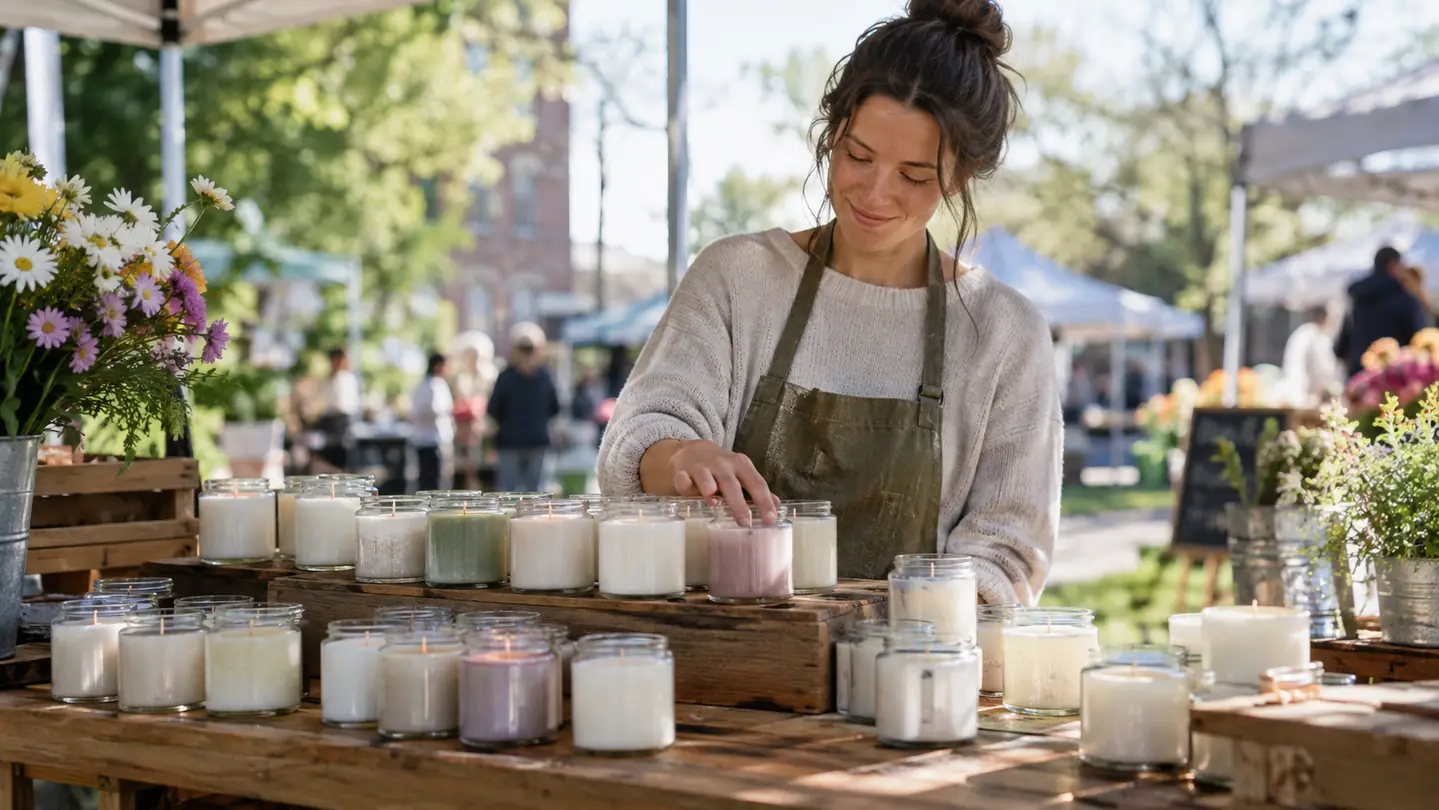
The question I hear most at my booth isn't 'what's your best scent?' It's 'what kind of wax is in these?' And I get it. People have bought candles that tunneled down the middle, drowned their own wick, and left half the jar sitting there useless. So when a customer asks me that, I want an answer I can give without mumbling. For the past few years, that answer has been American Soy Organics Freedom Soy Wax.
Let me back up and tell you how I work, because my setup is nothing special. I pour in a converted corner of my garage on a long butcher-block folding table, with a two-burner electric hot plate and a metal utility shelf where candles cure. I've had one booth at the Saturday farmers market for about four years, and I make mostly soy and coconut-soy container candles, with a few beeswax pillars in the winter. I don't have a dedicated pouring room. If a wax needs precise temperatures, careful babysitting, or special equipment, it's not going to survive contact with my routine.
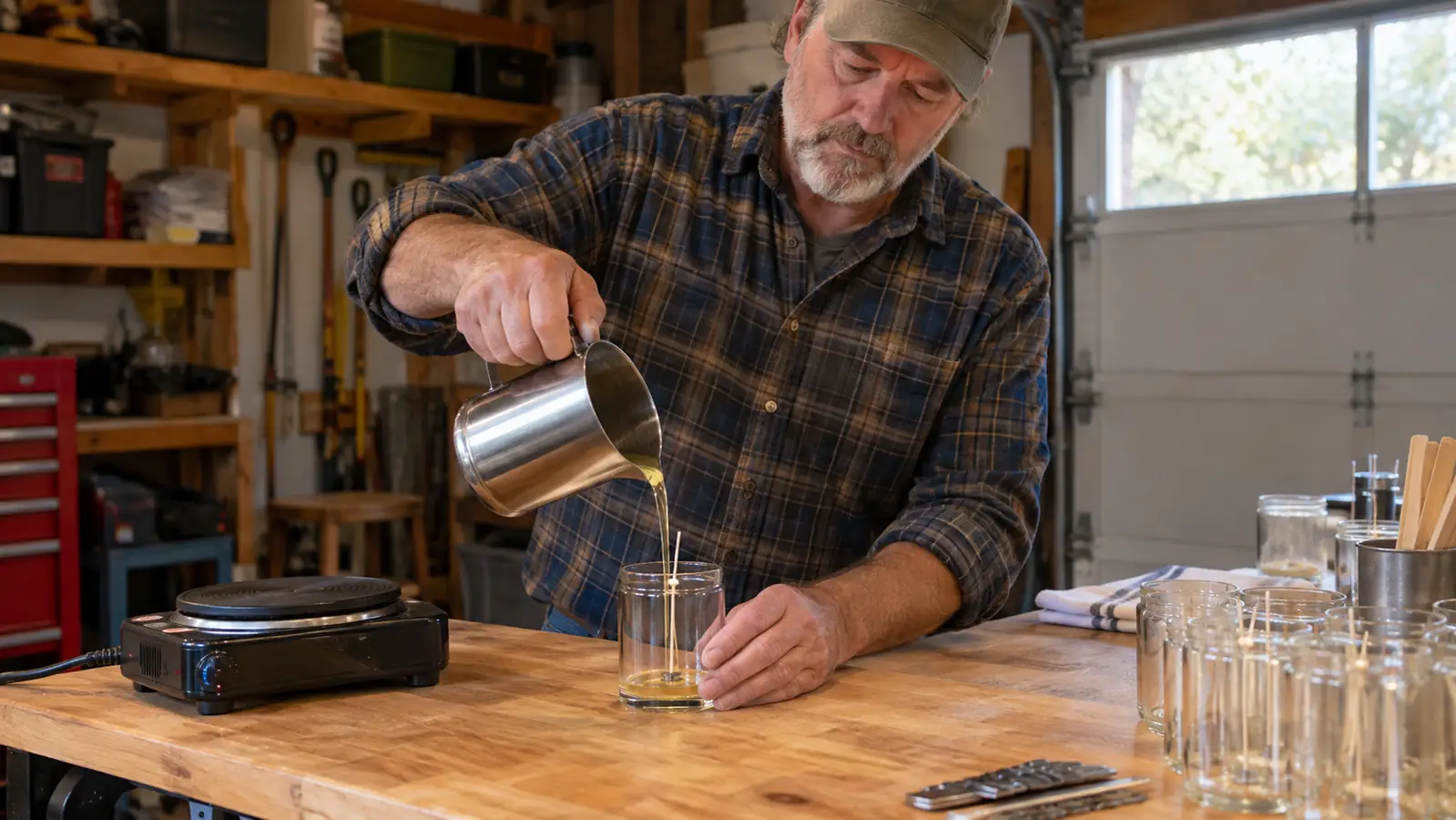
So when I switched my container candles to Freedom Soy Wax, what I was really looking for was a wax that would meet me halfway. It comes as beads, which measure out easily on my kitchen scale. It melts into a clear liquid on the hot plate without scorching. And it sets up smooth in the jars I use, with fewer sinkholes and wet spots than the wax I started with years ago. I still test every new wick, and I still let candles cure before they go on the table, because no wax fixes a rushed pour. But this one took a whole category of problems off my workbench.
Last Saturday was the kind of morning this wax is made for. The market opens at eight, and by nine-fifteen I had sold through two scents I'd planned to stretch until noon. A woman came back for a third jar of the same candle she'd bought three weeks earlier. That's the nicest compliment a booth can get, because she didn't come back for a deal. She came back because the candle did what a candle is supposed to do. It burned even, it lasted, and the smell reached the far end of her kitchen. She told me all of that before I had a chance to ask.
Mornings like that are the whole game at a farmers market. You get one shot with a customer who has already walked past a dozen other candle booths. Scent is what stops them. Burn quality is what brings them back. And burn quality starts with what's in the jar before the fragrance oil ever goes in.
She came back because the candle did what a candle is supposed to do. It burned even, it lasted, and the smell reached the far end of her kitchen.
The five-pound bag that's been on my shelf for years
I've poured American Soy Organics Freedom Soy Wax through four years of Saturday markets. If you're tired of babysitting your melt, start here and see what other small-batch makers say.
Amazon Check Today's Price on Amazon →Now the honest notes, because I don't want you ordering a five-pound bag thinking it will fix everything overnight. Soy wax has a learning curve, especially if you're coming from paraffin. Your first few pours might show a little frost on top or an air pocket around the wick. That's normal, and it's mostly cosmetic. What helped me was keeping a notebook. I write down the melt temperature, the pour temperature, the fragrance load, and the cure time for every batch. American Soy Organics wax has been forgiving in my garage, but forgiving still means you do your part.
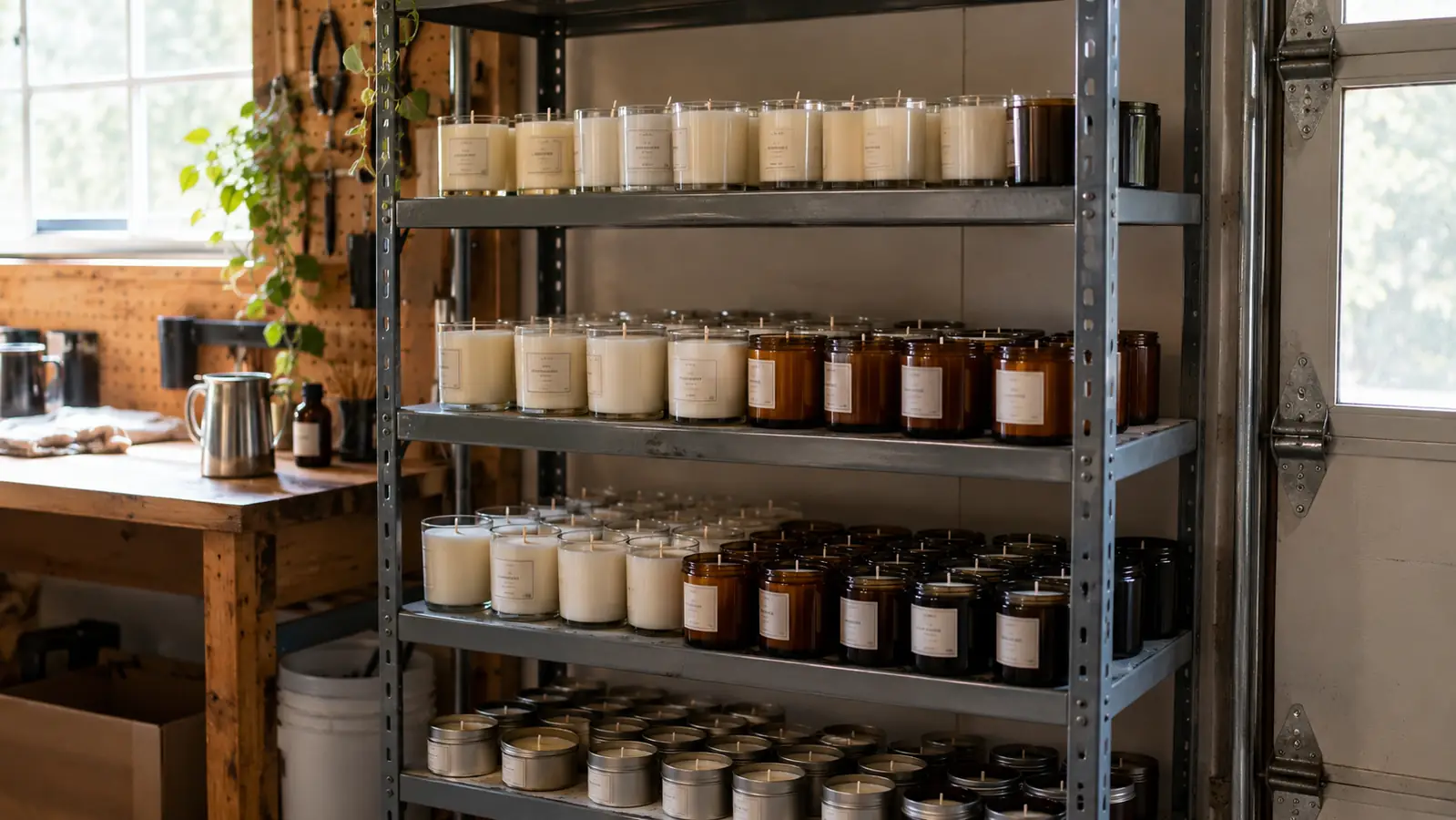
Fragrance is where the real work happens. Freedom Soy Wax holds scent well, but you still have to measure your oil correctly, stir it in at the right temperature, and give the candle a full week or more to cure before you judge it. I learned that the hard way, pouring a batch, sniffing it the next morning, and almost tossing it, then coming back a week later to find it smelled exactly right. Patience is part of the recipe.
On the practical side, this wax is easy to live with. Melted soy wax comes off my pans and my butcher block with hot soapy water, not a bottle of solvent. The beads store fine on my utility shelf between batches, which matters when you pour around a day job and a market booth. And because I buy the five-pound bag, I can try a new scent without committing to a case of wax I'm not sure about.
I'll be straight with you about what this wax is not. It is not the cheapest wax on the shelf, and it is not the one that promises to make your candles perfect with zero effort. Nothing does that. What it is, is dependable. In a business where most of my mistakes come from me, not the materials, that dependability is worth a lot.
What I'd Tell You If We Were Sitting at My Kitchen Table
If we were sitting at my kitchen table with a cup of coffee, here's what I'd say. Pick one wax and learn it before you switch to anything else. Test every wick like it's the only wick you sell. Write down your temperatures. Let your candles cure. And when a customer asks what's in your jar, be able to answer without mumbling. American Soy Organics Freedom Soy Wax is the wax I settled on after trying a few, but the reason it works is that I stopped changing variables every batch. The wax is good. The routine is what makes it good.
Start with one bag and a notebook
That's how I did it. One five-pound bag of American Soy Organics Freedom Soy Wax, a fresh wick test, and patience through the cure. Check today's price and read the reviews from other small-batch makers.
Amazon Check Today's Price on Amazon →