
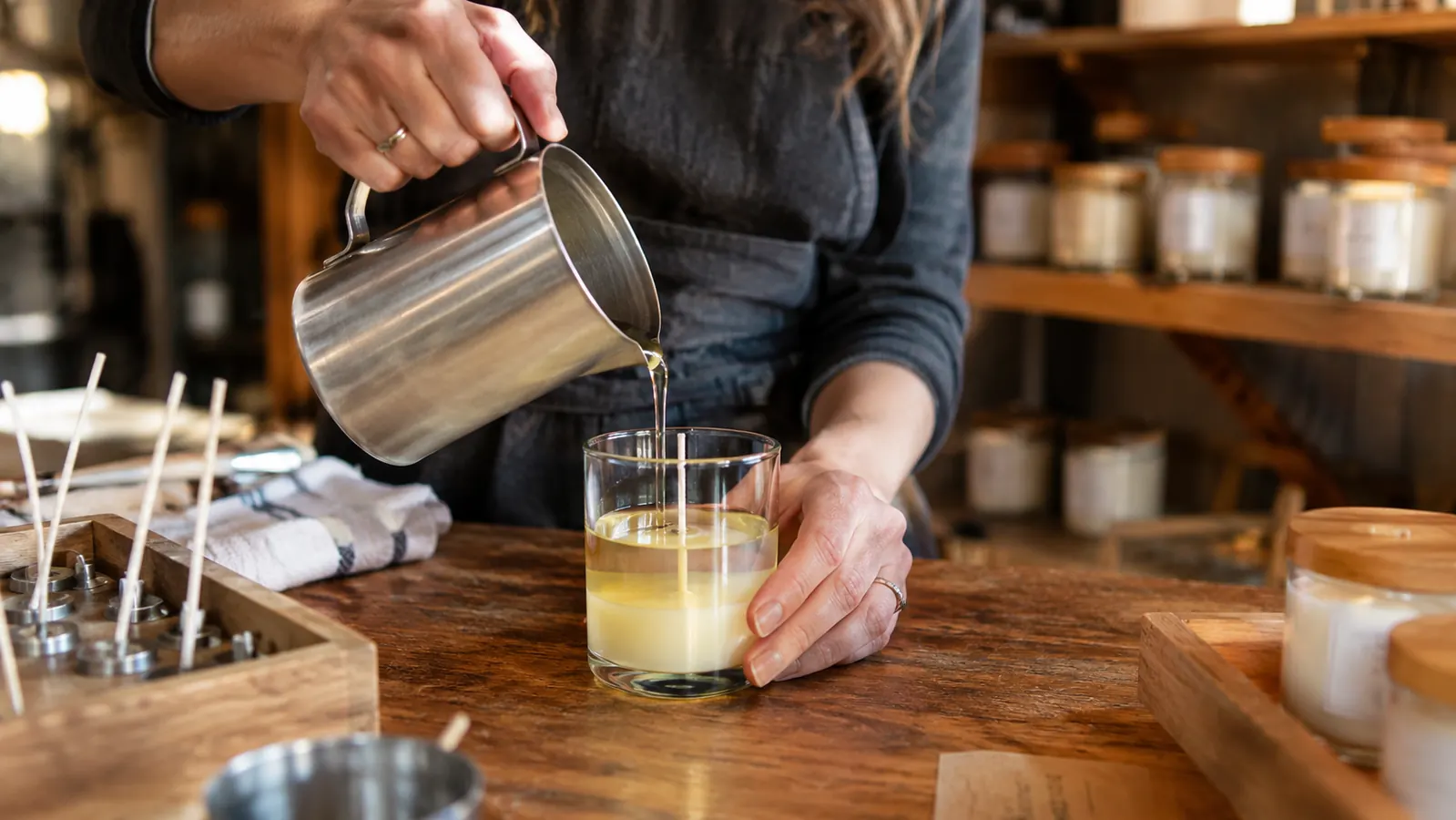
If you are a home candle maker trying to decide between soy and paraffin, you have probably read a dozen forum threads that end in an argument. I have been pouring candles in a converted corner of my garage outside Chattanooga for about four years, and I have made plenty of both. The short answer: American Soy Organics Freedom Soy Wax is the better everyday choice for a home candle maker who sells at a weekend market, but paraffin still wins on a few specific points that are worth knowing before you commit to one wax.
I tested both waxes the same way I test everything now: melt a pound of each, pour into identical 8 ounce glass jars, wick them, cure them, burn them, and keep notes. I did this over the course of a few weeks, between batches of coconut-soy for my usual booth stock. What follows is what actually happened, not what the marketing says.
My short verdict: Freedom Soy Wax is the better all-around wax for a home candle maker. It cleans up easier, gives a good scent throw at lower temperatures, and it is a story customers at a farmers market actually like. Paraffin is only worth choosing if you need the hardest, glossiest candle possible or you are committed to a specific fragrance oil that only performs in a hot melt.
| Freedom Soy Wax | Paraffin Wax | |
|---|---|---|
| Melt point | Around 125 to 130 F, forgiving for beginners | Around 130 to 145 F depending on blend, hotter to handle |
| Scent throw | Excellent cold and warm throw with fragrance at 6 to 8 percent | Strong hot throw but can overpower a small room and needs more fragrance oil |
| Cleanup | Hot soapy water, spills peel off surfaces once set | Cools into a hard waxy layer that scrapes off but leaves residue |
| Finish | Matte, creamy, rustic look that suits a handmade booth | Glossy, smooth, can look almost machine made |
| Burn behavior | Clean burn, little soot, cools and re-lights without tunneling if wicked right | Very consistent melt pool, but more soot and a hotter flame |
| Cure time | 7 to 10 days for best scent throw | 2 to 3 days is usually enough |
| Best for | Container candles sold at a market booth | Pillar candles and molds that need a hard structure |
Start with the wax that forgives mistakes
Freedom Soy Wax is the one I reach for when I want a clean burn, a good scent throw, and a finished candle that looks handmade without looking sloppy. It is the wax I built my booth stock around.
Amazon Check Today's Price on Amazon →Where Freedom Soy Wax Wins
The biggest difference I noticed right away was the melt. American Soy Organics Freedom Soy Wax melts at a lower temperature than the paraffin I tested, around 125 to 130 F, which means it is more forgiving if your thermometer drifts while you are pouring a batch. I heat my soy to about 175 F, add fragrance at 165 F, and pour at 135 F. With paraffin, I had to keep the melt hotter and the pour window felt tighter. For a home candle maker working on a two-burner electric hot plate, that lower melt point makes a real difference on a busy Saturday morning.
One Saturday in July last year proved the point better than any thermometer reading. I was pouring a batch of 12 candles for a market the next morning, and my two-burner electric hot plate, which is older than my marriage to Dale, started cycling on and off. The soy wax sat at 140 F for almost ten minutes while I answered a text from a customer about a custom order. With paraffin, that pause would have meant a thickened, uneven pour and a batch I could not sell. With American Soy Organics Freedom Soy Wax, I just stirred, let it come back up to 175 F, added the fragrance at 165 F, and poured at 135 F. The candles cured fine and every one sold by noon. That is the difference between a wax that works with your mistakes and a wax that punishes them. I have not had a batch fail on me since, and I pour most Saturdays of the market season.
Cleanup is where soy completely won me over. A spill of melted soy wax on my butcher-block table hardens into a soft layer that I can peel off in one piece. Paraffin cools into a hard, brittle sheet that shatters and leaves a greasy film. My pouring pitcher washes out with hot soapy water after soy. After paraffin, I was scrubbing with paper towels and still finding a slick residue. When you are making a dozen candles at a time, that extra cleanup time adds up.
The scent throw surprised me. I had heard for years that paraffin carries fragrance better, but in my side-by-side test, the soy candle threw a warm, even scent in my garage within about 15 minutes of lighting. The paraffin candle threw a slightly stronger scent, but it was sharper and filled the space too fast. For a container candle that someone will burn in a living room or bedroom, the soy throw felt more pleasant. I use fragrance oil at about 7 percent for soy, and that has been the sweet spot for my booth customers.
Where Paraffin Wins
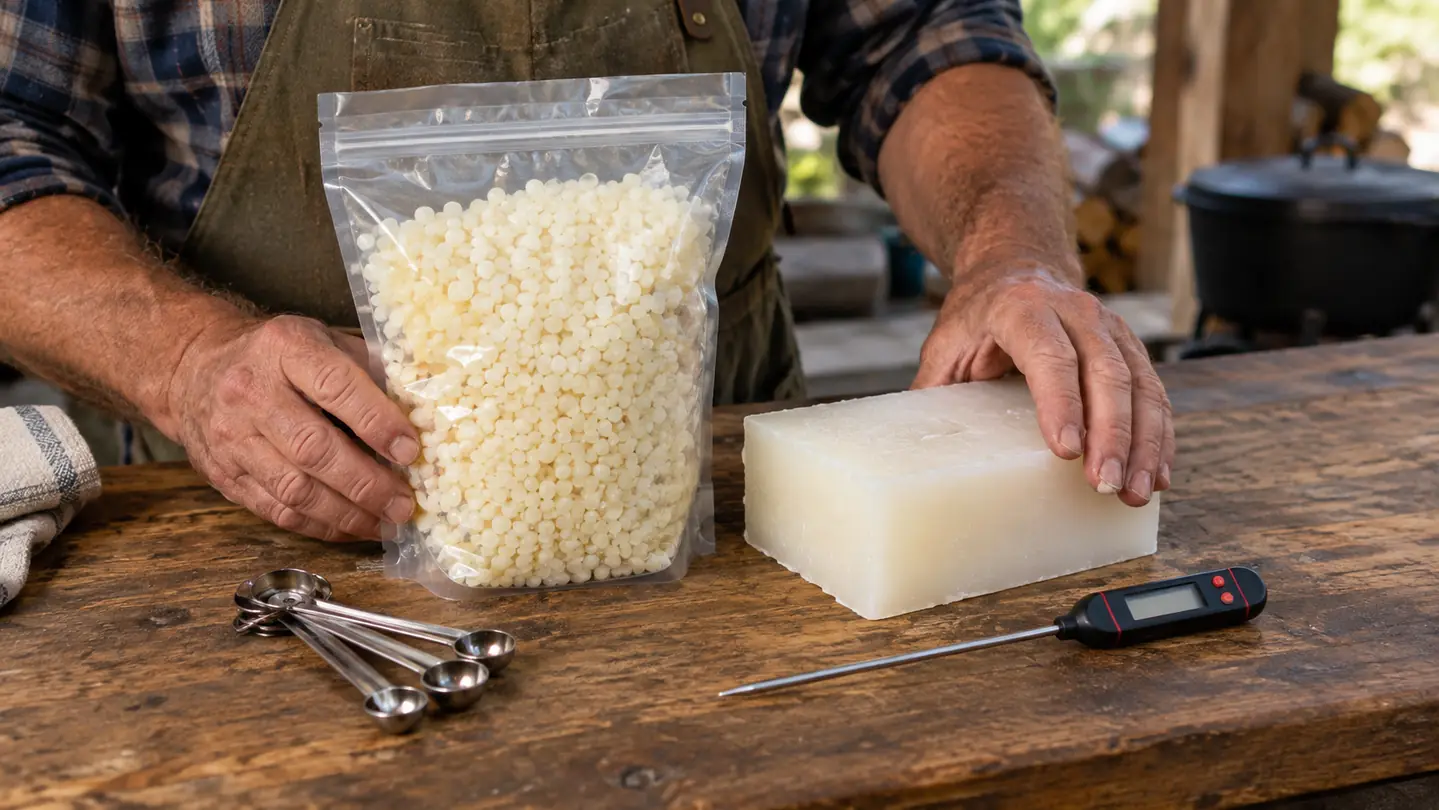
I am not going to pretend paraffin has no place. It wins on finish. A paraffin candle comes out of the mold with a smooth, glossy surface that soy simply does not match. If you are making pillar candles or using molds that need a hard, structured shape, paraffin is the better tool. My soy pillars have a softer, creamier look, which I like, but if a customer wants a candle that looks like it came off a factory line, paraffin is the honest answer.
In late October, I tried a batch of paraffin pillars for the winter market. I used a set of metal molds I had bought secondhand, melted the paraffin to 185 F, and poured at 165 F. The first pillar came out of the mold with a surface so smooth and glossy that Dale asked if I had bought it at a store. My soy pillars from the week before had a soft, creamy look with tiny surface bubbles that I call character and customers call handmade. Both are fine, but they are different products. That gloss is not just cosmetic either. A paraffin pillar holds a sharp edge on a mold detail, like a spiral or a fluted base, in a way that soy softens. I poured a fluted pillar in soy first and the ridges came out rounded, almost blurred. The same mold with paraffin gave me clean lines that looked crisp from across the booth. If you are selling a candle where the shape is the point, that difference decides which wax you need. It also releases from the mold more easily, which matters when you are making twelve of something and the clock is running.
Paraffin also cures faster. A soy candle needs 7 to 10 days to reach its full scent throw, which means I have to plan my pours about a week and a half before a market. Paraffin was ready in about 3 days. That matters if you are in a pinch for a custom order or you only have a few days before an event. I have also found that some fragrance oils, especially certain citrus blends, behave differently in paraffin and can give a brighter hot throw. If you are committed to a fragrance that only performs in a hot melt, paraffin might be the reason you keep one bag around.
Paraffin wins on gloss and speed. Soy wins on cleanup, burn quality, and the story you tell at a booth. For what I sell, the story wins every time.
Burn Quality and Wick Testing
Both waxes need wick testing, and I want to be clear about that because no wax fixes a wrong wick. With soy, I found that a slightly larger wick was needed than with paraffin in the same jar, because soy has a softer structure and the melt pool develops more slowly. I use a cotton wick with a zinc core for my soy containers, size CD 10 for an 8 ounce jar, and it burns clean with no mushrooming. With paraffin, I dropped to a CD 8 and still got a hot flame that produced a thin wisp of smoke when I blew it out.
The first wick I tried in soy was a CD 6, the size that worked in a coconut-soy blend I had used the year before. It drowned. The melt pool never reached the edge of the 8 ounce jar, and after three burns I had a tunnel down the middle and a thick wall of wax I could not fix. My notes from that week are blunt: "CD 6 too small, flame looks scared." I stepped up to CD 8 and the pool opened up to the glass by the second burn, but the flame still looked a little weak, so I went one more size to CD 10. That is the one I have used ever since. The paraffin test needed the opposite move. A CD 10 in paraffin burned so hot that the jar got too warm to hold, and the flame flickered hard near the end of the burn. CD 8 was right. That is the kind of testing no one can skip, and it is why I keep a notebook with a row for every wick, every wax, and every jar I pour. I test every new wax this way now, and I recommend you do the same before you pour a full batch.
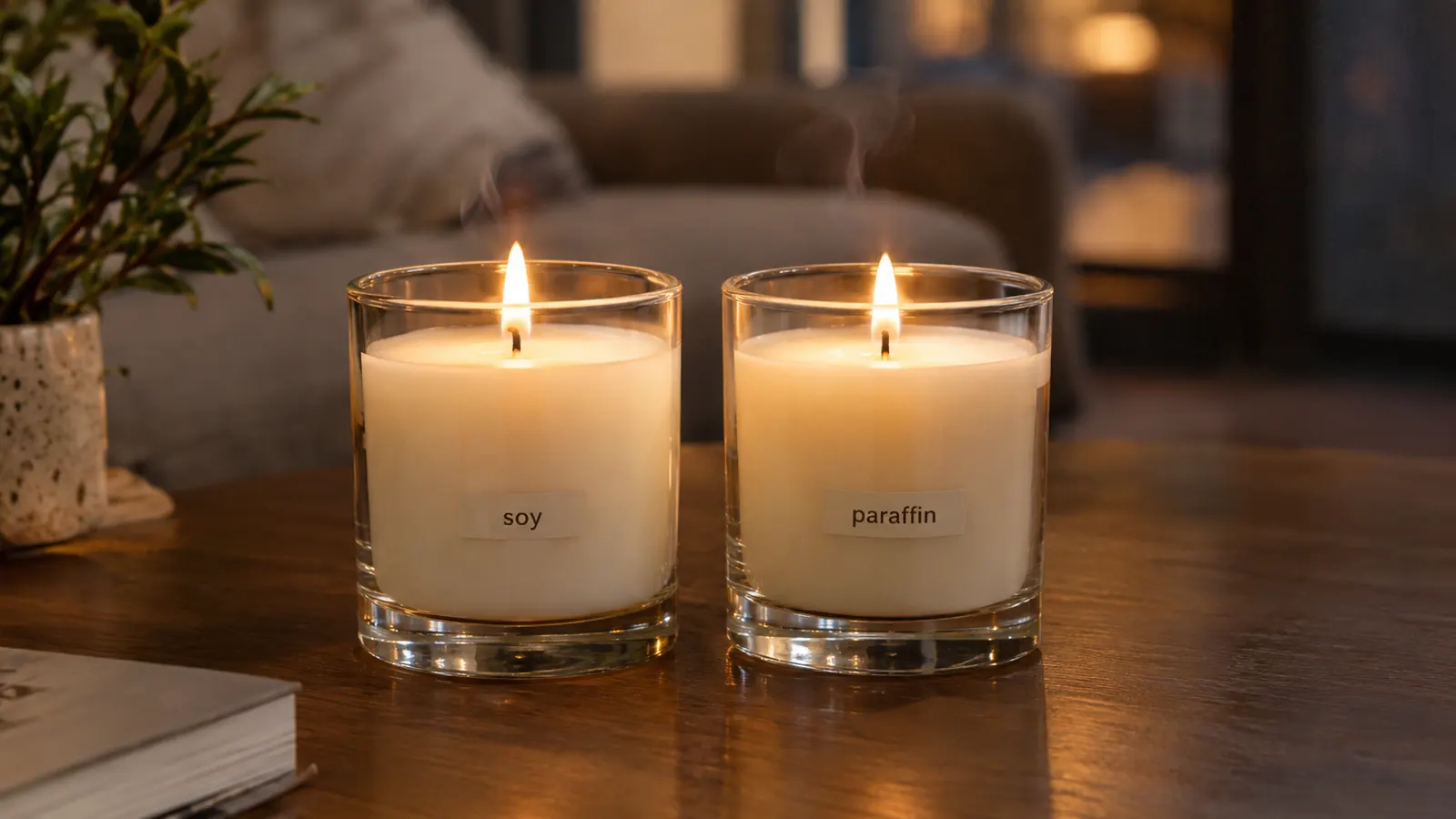
The burn itself was different. The soy candle burned evenly down the sides of the jar, leaving a clean glass edge. The paraffin candle also burned evenly, but it left a faint soot ring at the top of the jar after a few burns. I wiped it off easily, but I would not want to hand a customer a candle that does that on their second burn. The soy candle also re-lit cleanly after being extinguished and cooled, which is something my market customers notice.
What Customers Actually Think
I have sold candles at one Saturday farmers market booth for about four years, and I have learned that the wax story matters to the people who buy. When I switched my booth stock to soy, I started saying a simple line: these are soy wax candles, so they burn clean and they support American farmers. I am not making a political statement, I am telling them what is in the jar. Customers who care about natural products ask follow-up questions, and the conversation often ends with a sale.
One cool morning in September, a woman stopped at my booth, picked up a jar of my soy candle, and asked what made it different from the candle she had bought from a chain store the week before. I gave her my usual line about clean burn and American farmers. She turned the jar over, read the label, and said she had been looking for a soy candle for months because her daughter had asked for one. She bought two. That is a small thing, but it happens more often than you would expect, and it is why I stopped trying to sell paraffin at the market altogether. I have had the same conversation with men buying gifts, with a woman who makes her own candles and wanted to compare notes, and with a regular who comes back every few weeks for the cedar and sage scent. None of them asked about melt point or cure time. They asked what was in the jar and whether it was natural. Soy answers that question before I open my mouth. Paraffin forces me to explain why the wax that made their grandmother's candle is fine, which is a conversation I can win, but it is not a conversation I want to have at a busy booth on a Saturday morning. The label on the jar did half of that work before I said a word.
Paraffin is a harder sell at a market booth. A customer who is deciding between my soy candle and a paraffin candle from another stall will often choose the one labeled natural. That is not a judgment on paraffin, it is just the reality of weekend markets. If I were selling online where the customer cannot smell the candle before buying, I would still choose soy for the same reason: the label does the selling.
Who Should Buy Which
Buy Freedom Soy Wax if you are a home candle maker who pours container candles, sells at a market or craft fair, wants an easy cleanup, and likes the natural story that comes with soy. It is also the better choice if you are just starting out, because the lower melt point and forgiving nature give you room to learn without wasting a batch.
Buy paraffin if you are making pillar candles, mold candles, or a product that needs a hard glossy finish and a short cure time. It is also worth trying if you have a specific fragrance oil that you love and it does not perform in soy. Just know that you will spend more time cleaning up and you will have a harder time explaining the wax to a customer who wants something natural.
The wax I stock in my garage
American Soy Organics Freedom Soy Wax is what I keep on my shelf for my booth batches. It is not the cheapest wax and it is not the fastest, but it is the one that makes the candles I am proud to sell. If you pour containers, start here.
Amazon Check Today's Price on Amazon →