
I have poured candles in a converted corner of my garage for about four years now, and I still get a little thrill when a new box of fragrance oil shows up. So when the Fiora Naturals Premium Fragrance Oil Set landed on my worktable, I was genuinely curious. I am also a skeptic, because I have tested a lot of oils that smelled amazing in the bottle and then vanished the moment the wax set. This is the honest version of that test: what Fiora Naturals got right, what it got wrong, and who should probably skip it.
I am Marla Quinlan. I sell soy and coconut-soy container candles at one Saturday farmers market booth outside Chattanooga, Tennessee. I am not a chemist, and I do not pretend to be one. I am a person who has ruined plenty of batches, thrown away plenty of wicks, and learned to read the little signs a candle gives you while it burns. That is the perspective this review comes from.
The Quick Verdict
A solid, affordable sampler for a weekend candle maker who wants variety without committing to big bottles. The throw is good, not spectacular, and a few scents need more patience than the label suggests.
Amazon Check Today's Price →A sampler that lets you test before you commit
If you are tired of buying 16-ounce bottles of a scent you end up hating, the Fiora Naturals set is a low-risk way to find the ones your customers will actually ask about.
Amazon Check Today's Price on Amazon →How I Tested the Fiora Naturals Fragrance Oil Set
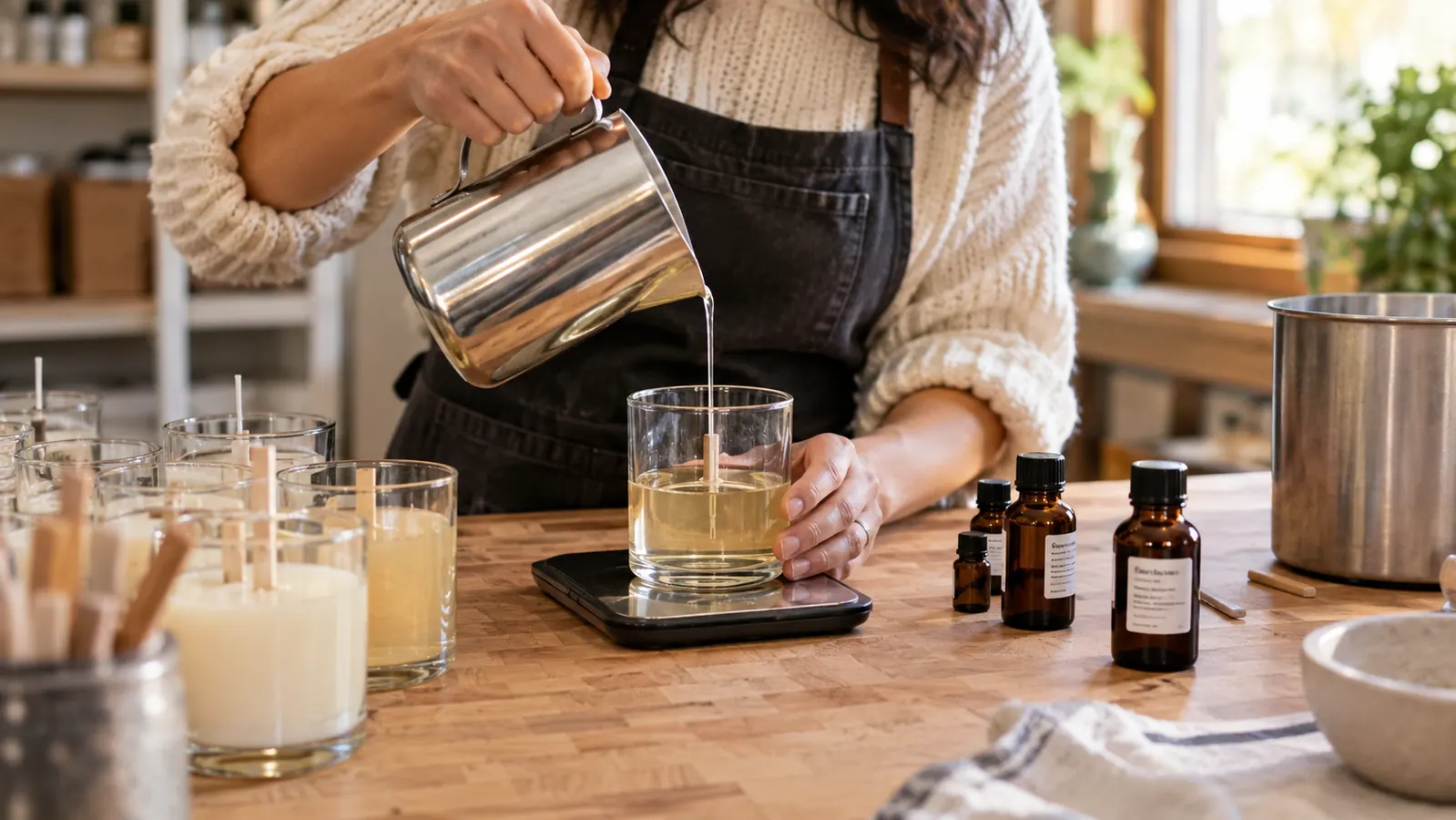
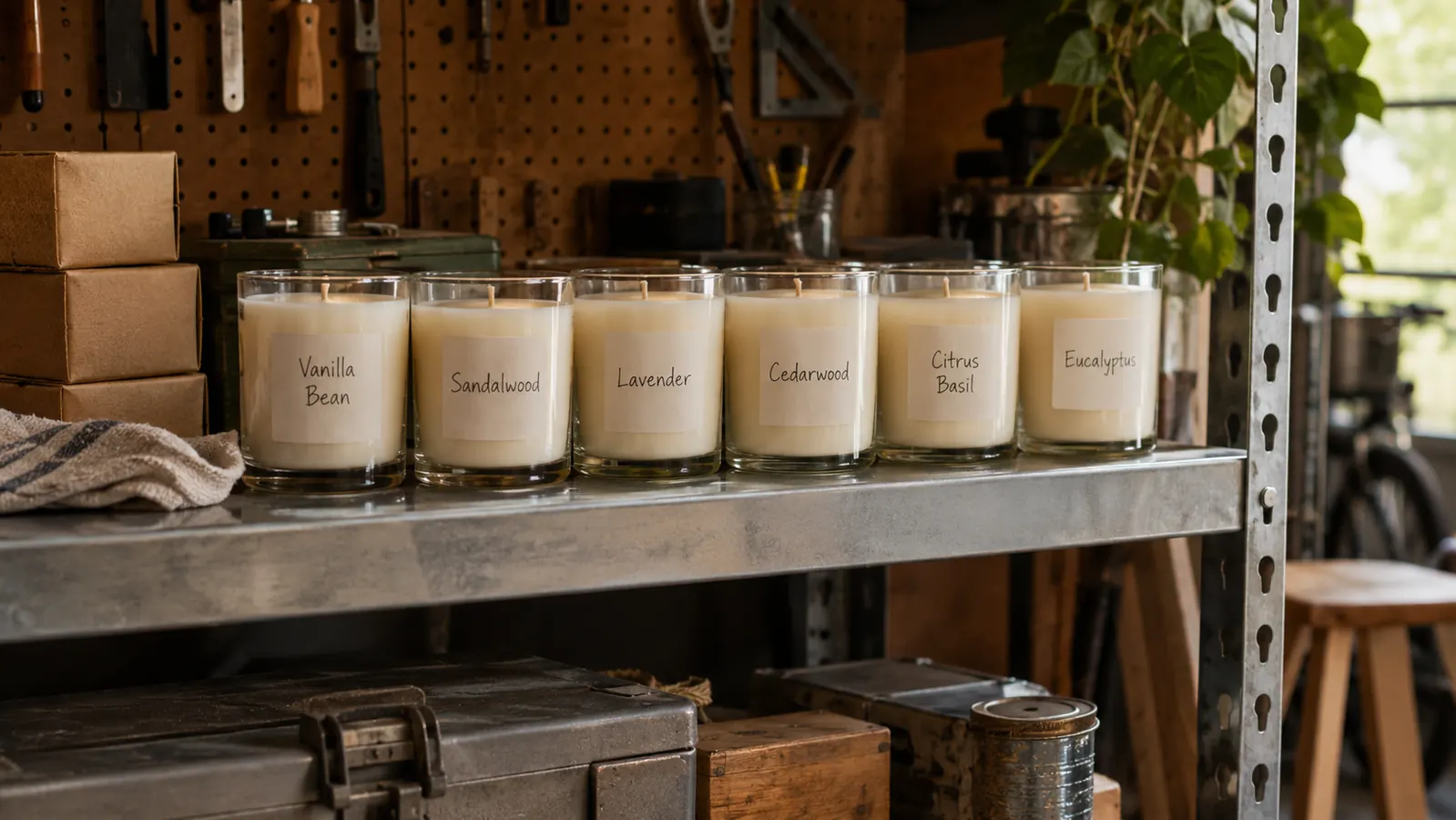
I started the test on the first Tuesday of March, the same week I usually start planning the spring market season. I poured ten 4-ounce test candles in my standard coconut-soy blend, one for each scent in the set, and I used the same wick series I use for my regular 8-ounce line, just sized down one step for the smaller jar. I wrote the date and the scent on each lid with a grease pencil before the wax set. I also poured two-ounce wax melts in a silicone mold, because an oil can be wonderful in wax and disappointing in a melt, or the other way around. I have seen both happen with the same bottle.
I kept a notebook for each scent, the same kind of spiral notebook I use for booth inventory. I wrote down the fragrance load, the pour temperature, and how the oil smelled right out of the bottle. Then I checked again at 24 hours, at 48 hours, and after a full week of cure. I learned that habit the hard way after I once poured a whole batch and sold it before it had cured, and the customer brought it back because it smelled like nothing. Now I wait. I pour on a two-burner electric hot plate in the corner of my garage, and on test days I keep the notebook right next to the scale so I do not have to carry melted wax across the room. When the week was up, I burned each candle in my garage with the door closed, walked to the other end of the room, and asked myself the question that matters at a market booth: would a customer smell this from three feet away and ask what it was?
I also tested the oils at two fragrance loads, 6 percent and 9 percent, because that is where a lot of samplers fall apart. A set can smell great at 6 percent and turn soapy or faint at 9 percent. My first attempt at the higher load was a mess, and it was my fault, not the oil's. I poured the vanilla at 9 percent into the same wick I use at 7 percent, and the wick drowned halfway through the first burn. I had to re-pour all three testers with a wick one size up, and that cost me a whole evening. It was the kind of mistake a new maker would blame on the fragrance, so I am mentioning it here: wick size has to move with fragrance load.
What Nobody Tells You About the Bottles
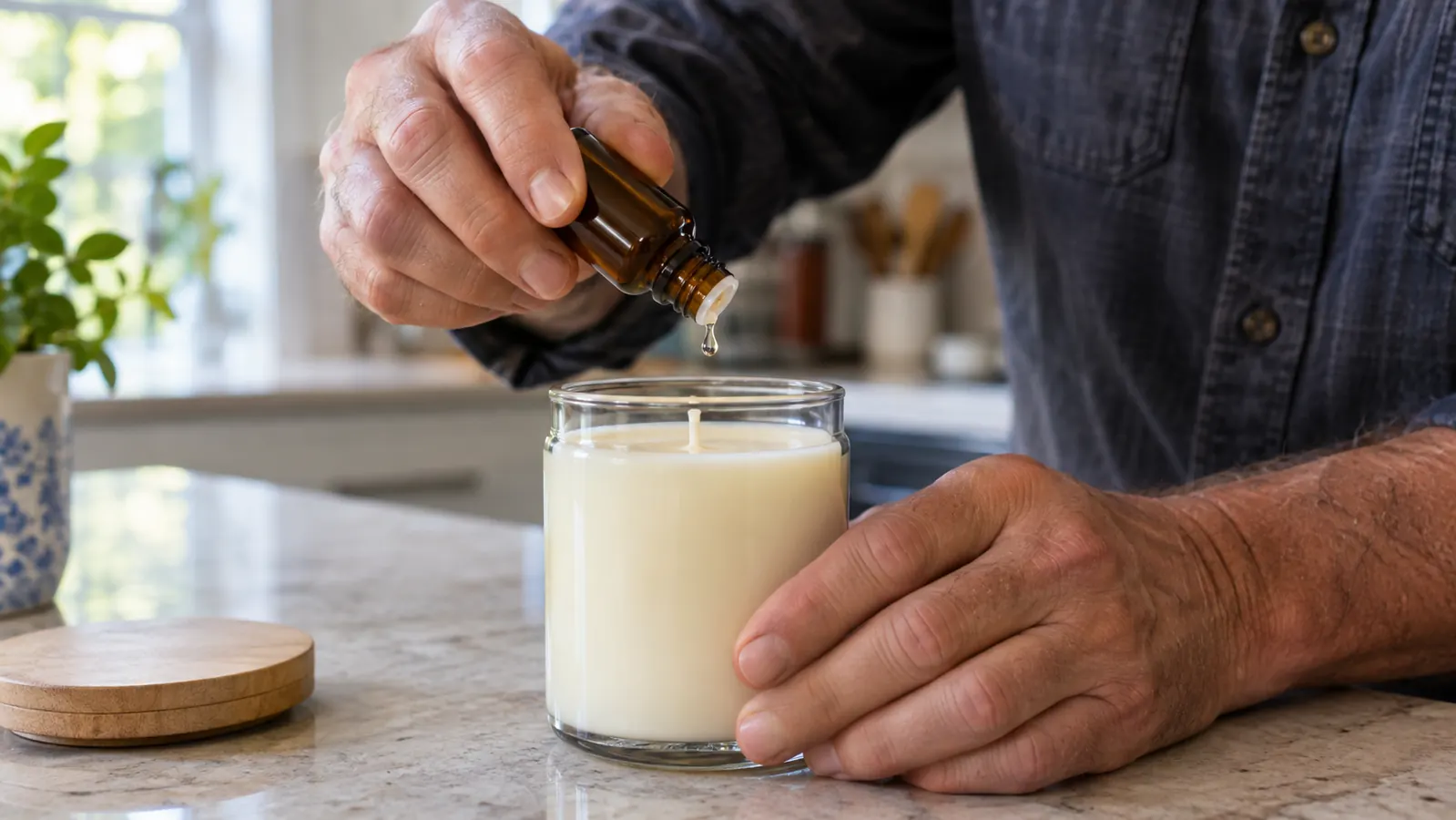
The first thing you notice is that the bottles are small. That is not a criticism, it is a warning. These are sampler sizes, and they are meant to be sampler sizes. I counted out the set when it arrived and realized I had about two ounces of each scent, enough for two 4-ounce test candles at 7 percent load with a little left over for a melt. The whole box fit in one hand, which made me laugh, because my last supply order took two trips from the car. If you are planning to pour a full booth inventory of one scent, you will need several sets or the larger bottles. For testing, though, the size is exactly right. I would rather have ten small bottles I actually use than one big bottle I regret.
The dropper tops are the part nobody mentions. They work, but they are not precision tools. When I was measuring fragrance load by weight on my digital scale, I found myself fighting the dropper a little. One night I dripped oil into the same measuring cup three times and got three different weights, because the dropper would release a slow drip and then a sudden glug. It is fine for a 4-ounce test candle, where a tenth of a gram either way does not matter. But if you are scaling up to a full batch, transfer the oil to a bottle with a proper pour spout or use a pipette. I keep a small funnel and a set of graduated pipettes on the shelf for exactly this. That is a small thing, but it is the kind of small thing that makes a difference when you are trying to keep a product line consistent.
The labels are plain and the bottles are unremarkable. That does not bother me. I am not displaying them at my booth. I am using them on a worktable, and they do the job. One small note: because the labels are plain, I had to write the scent name on each bottle cap myself. The caps are small, so I used a fine-point permanent marker and kept a list taped to the shelf. It took ten minutes and saved me from grabbing the wrong bottle halfway through a pour.
The Scents That Worked
I will not pretend I loved every scent in the set, because I did not. But the ones that worked, worked well. The lavender was the surprise of the bunch. I have tested a lot of lavender oils over the years, and many of them smell like a cleaning product. This one smelled like actual lavender, with a little sweetness and none of the sharp chemical edge. It threw well in my coconut-soy blend at 7 percent, and it held up through the full burn. I poured it on a Thursday, and by Monday the cold throw was already filling the garage when I walked in. I burned that test candle down to the last quarter inch over the course of a week, and the scent stayed steady the whole way. That matters to me because a candle that smells good for the first hour and then fades is a candle I cannot sell.
The vanilla was also strong. Vanilla is a tricky scent because it can go plasticky or buttery, and this one stayed on the warm, sweet side. It was not the most complex vanilla I have ever used, but it was reliable, and reliable is what sells at a farmers market. I poured a second test of the vanilla at 8 percent, just to see if it would get stronger without turning bitter, and it held. The hot throw filled my garage, which is about the size of a small living room, and it did not smell like a bakery candle from a discount store. It smelled like vanilla.
The citrus scent was bright and clean, and it performed exactly the way I expect a citrus to perform: great cold throw, slightly softer hot throw, and a tendency to fade a little faster than the heavier scents. That is not a flaw in the oil. That is just what citrus does. If you are new to candle making, that is the kind of thing nobody tells you until you have already blamed yourself for it. I know, because I blamed myself for years before I learned that citrus needs a little help. In this set, I would pair the citrus with the vanilla if I wanted a longer-lasting summer candle. On its own, it works better as a wax melt, because a melt gets used up in an afternoon and the fade does not matter as much.
The Scents That Did Not Work for Me
There were two scents I would not pour again. One of them smelled fine in the bottle and then turned a little soapy in the wax. I tried it at a lower load, and it was better, but it still was not something I would put in front of a customer. The other one was simply not to my taste. It was not a bad oil. It was just not a scent I would choose, and that is exactly why a sampler is the right way to buy fragrance oil.
This is the part of the review that matters. If I had bought a 16-ounce bottle of either of those scents, I would have been stuck with it. Instead, I used a few ounces, made notes, and moved on. The sampler format saved me from my own optimism.
How the Throw Compares to Bigger Brands
I have used oils from several well-known candle supply companies over the past four years, and I will be honest: Fiora Naturals is not the strongest throw I have ever tested. It is good, and it is consistent, but it is not the loudest. I poured the same lavender from a premium supply house side by side with the Fiora Naturals lavender, both at 7 percent, and the premium oil won on sheer volume. The Fiora Naturals version was not far behind, and for a booth or a bedroom the difference would not matter to most customers. I kept both test candles on the same shelf, same wick, same pour temperature, so the only difference was the oil.
What impressed me more than the strength was the consistency. I poured the same scent twice, a week apart, and the second batch smelled almost identical to the first. I did a third pour of the lavender in the middle of the month, just to be sure, and I could not tell the three candles apart cold. That is harder to find than people think. A lot of oils vary from batch to batch, and that variance is a nightmare when you are trying to keep a product line consistent. I have had to relabel a whole shelf of candles once because a supplier changed a formula without telling anyone, and the new batch smelled like a completely different scent.
The cure time was also reasonable. Most of the scents were ready after about five to seven days. A couple of the heavier ones needed the full week to stop smelling a little sharp. I test by sniffing the jar cold every morning starting on day three, and I do not pour for the booth until the sharp note is gone. With this set, the earliest I would have felt comfortable selling anything was day five, and that was the citrus. The lavender and vanilla both needed the full seven. I have learned not to rush cure time, because a candle poured on Sunday and burned on Wednesday will always disappoint, no matter whose oil is in it.
What I Liked
- Sampler sizes mean you are not stuck with a 16-ounce bottle of a scent you end up hating
- Consistent from batch to batch, which matters when you are building a product line
- Works in both candles and wax melts, so one set covers two kinds of products
- Good throw for small spaces like a booth or a bedroom
- Plain bottles are easy to label yourself with a permanent marker
Where It Falls Short
- Dropper tops are imprecise when you measure by weight; plan to transfer to a pour bottle
- A couple of scents turn soapy in wax at higher fragrance loads
- Not the strongest throw on the market for a large open room
- Small bottles mean you will need several sets to pour full booth inventory
The lavender was the surprise of the bunch. It smelled like actual lavender, with none of the sharp chemical edge.
Who This Is For
This set is for the home candle maker who is tired of guessing. If you are new to the hobby, or if you have been making candles for a while but have not found your signature scents yet, a sampler like this is a smart way to explore. It is also great for someone who makes wax melts and wants a variety of scents without a shelf full of half-empty bottles.
It is also for the person who sells at a small market, like me. I do not need a huge inventory of every scent. I need to know which three or four scents my customers will actually buy, and a sampler lets me test that without a big investment.
Who Should Skip It
If you are running a serious candle business and you already know your signature scents, you do not need a sampler. You need larger bottles of the oils you already trust. This set would just sit on your shelf.
If you are looking for the absolute strongest throw available, this is probably not the set for you. There are oils out there that are louder, and if that is your priority, you should buy those instead. And if you are the kind of person who hates the idea of throwing away a scent you do not like, a sampler is still the right idea, but you should be prepared to make peace with the fact that not every scent will be a winner. And if you already have a supplier you love, a sampler is fine to try on the side, but it should not replace the oils you know work.
The honest bottom line
Fiora Naturals is not the fanciest fragrance oil on the market, but it is a reliable, affordable way to test a range of scents before you commit to big bottles. For a weekend market maker, that is worth a lot.
Amazon Check Today's Price on Amazon →